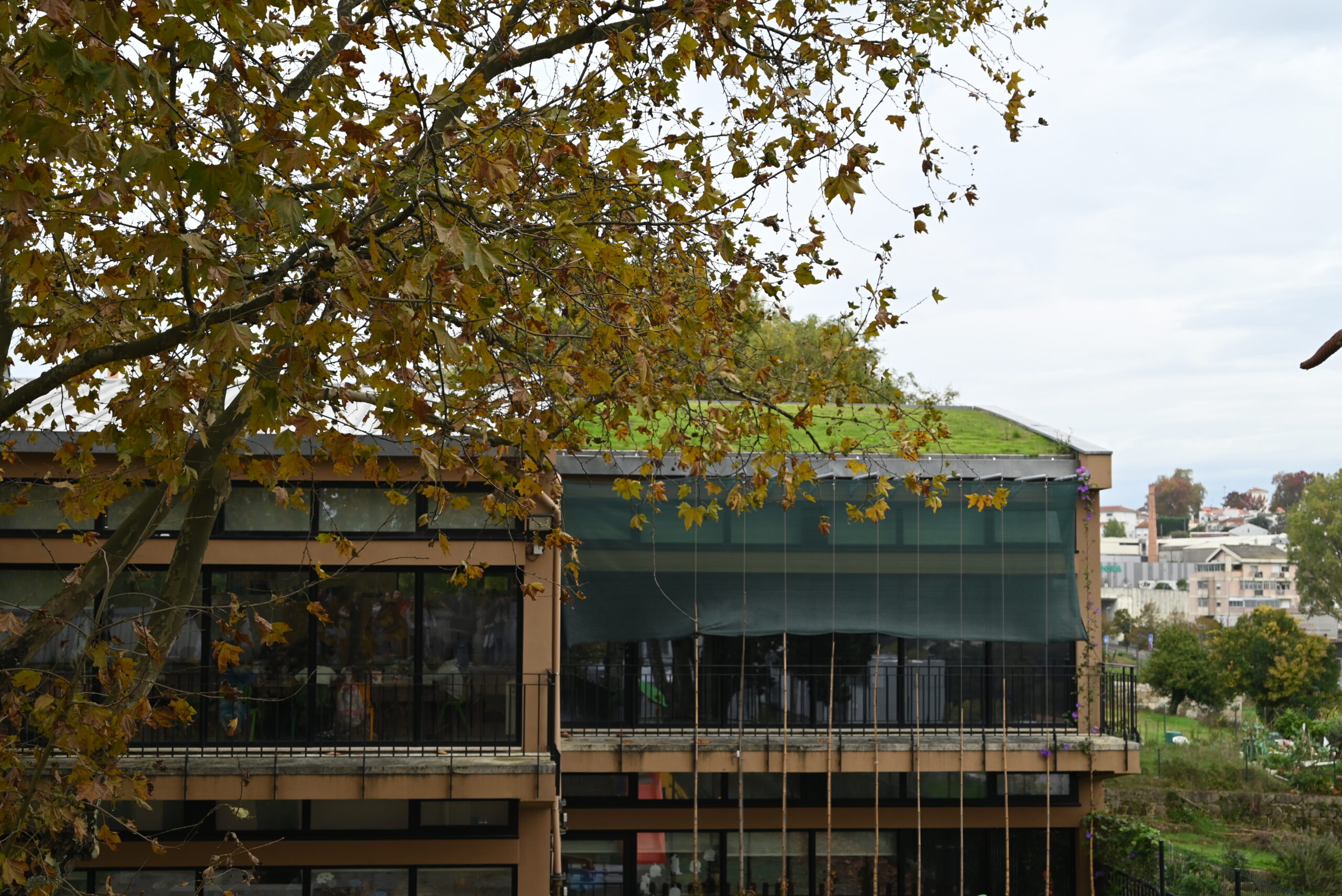
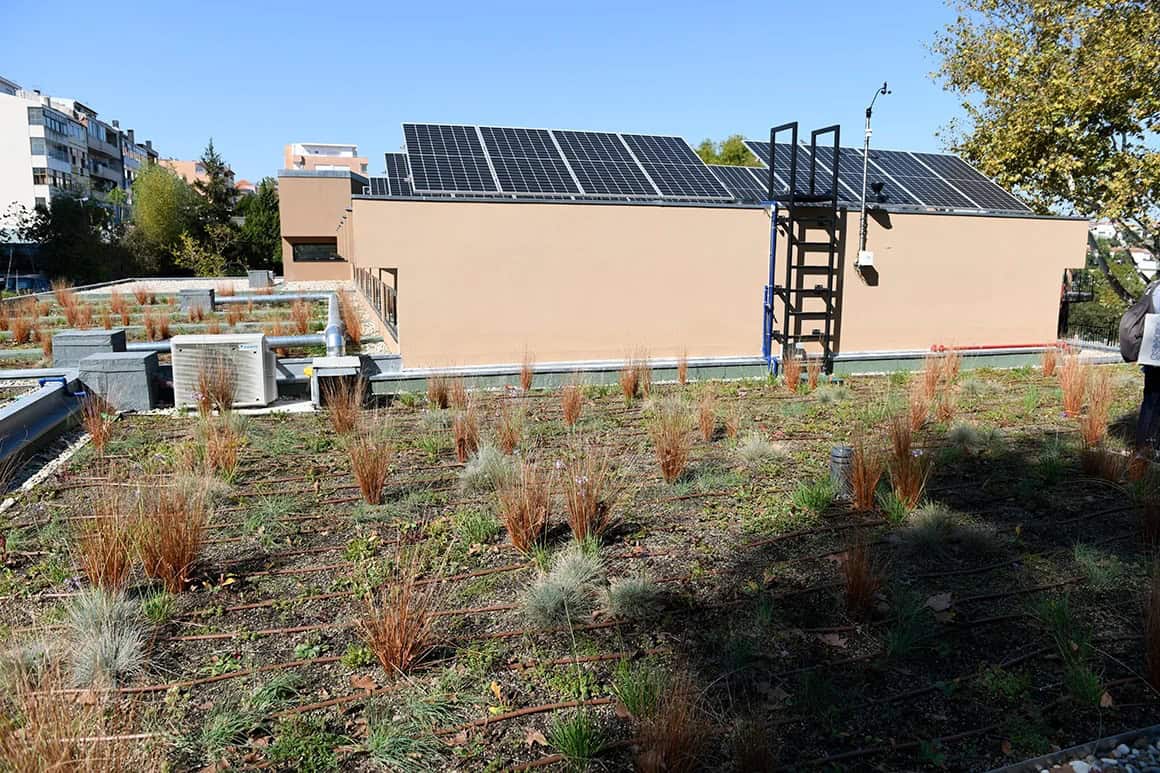
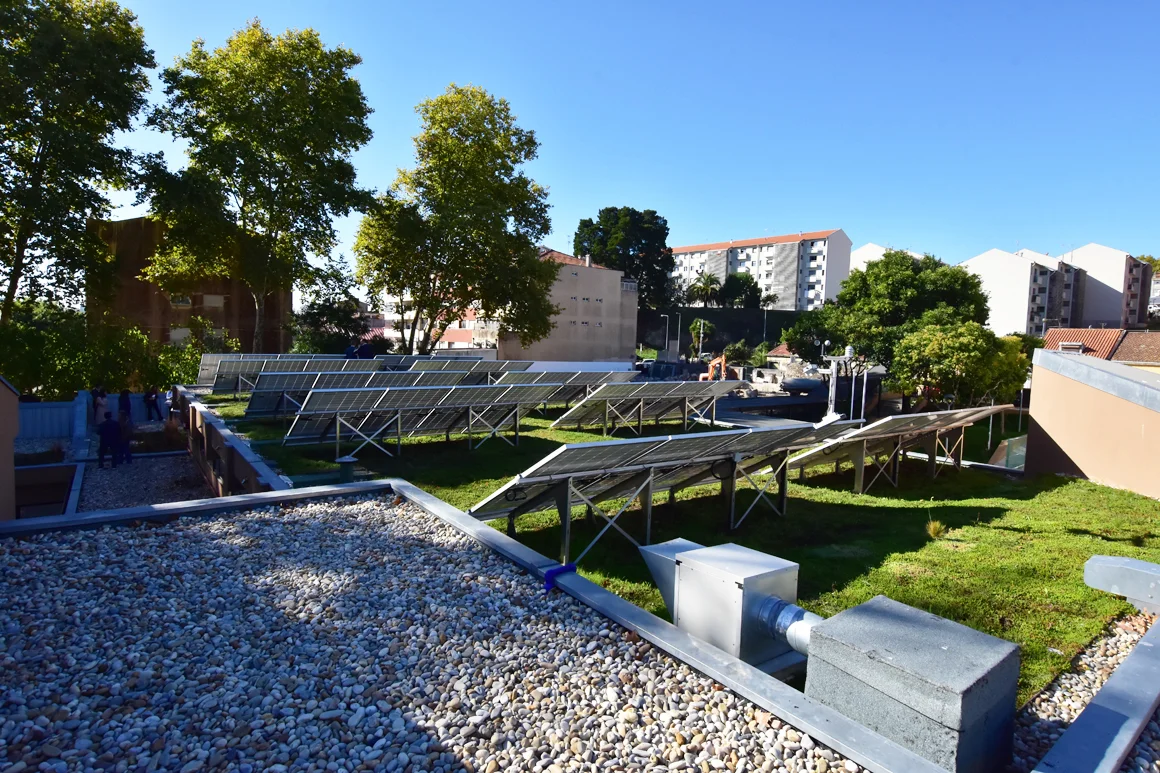
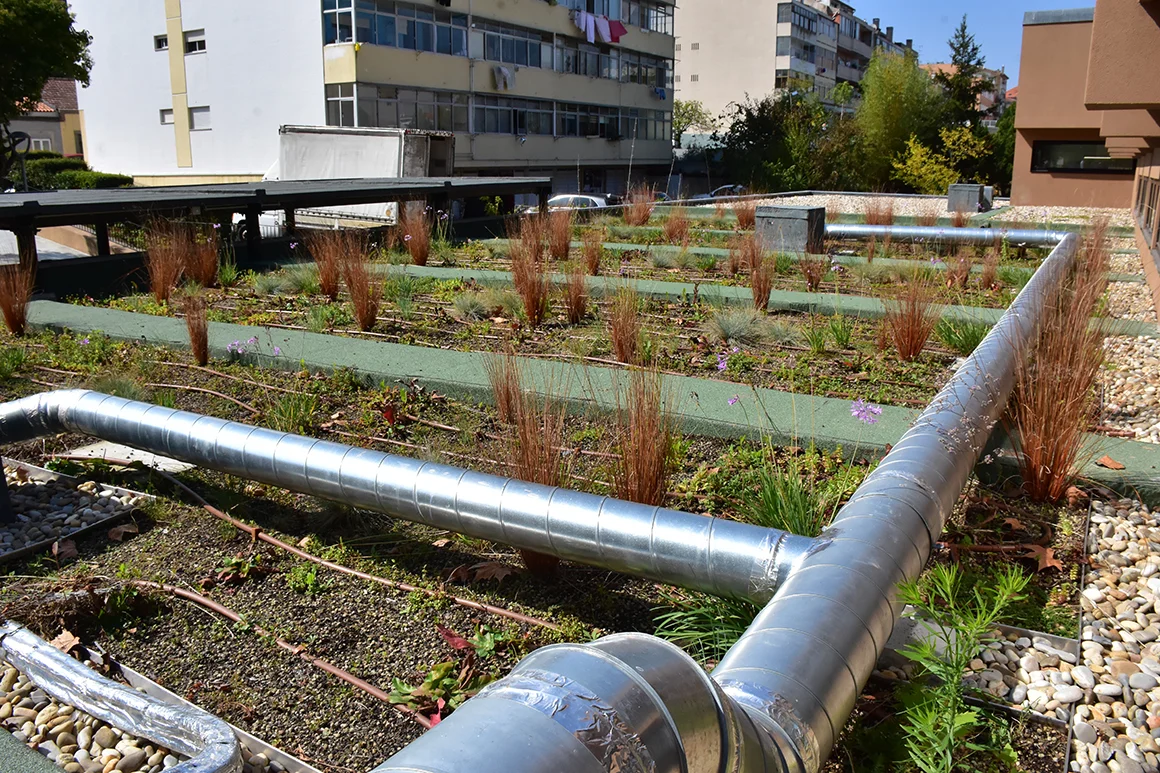
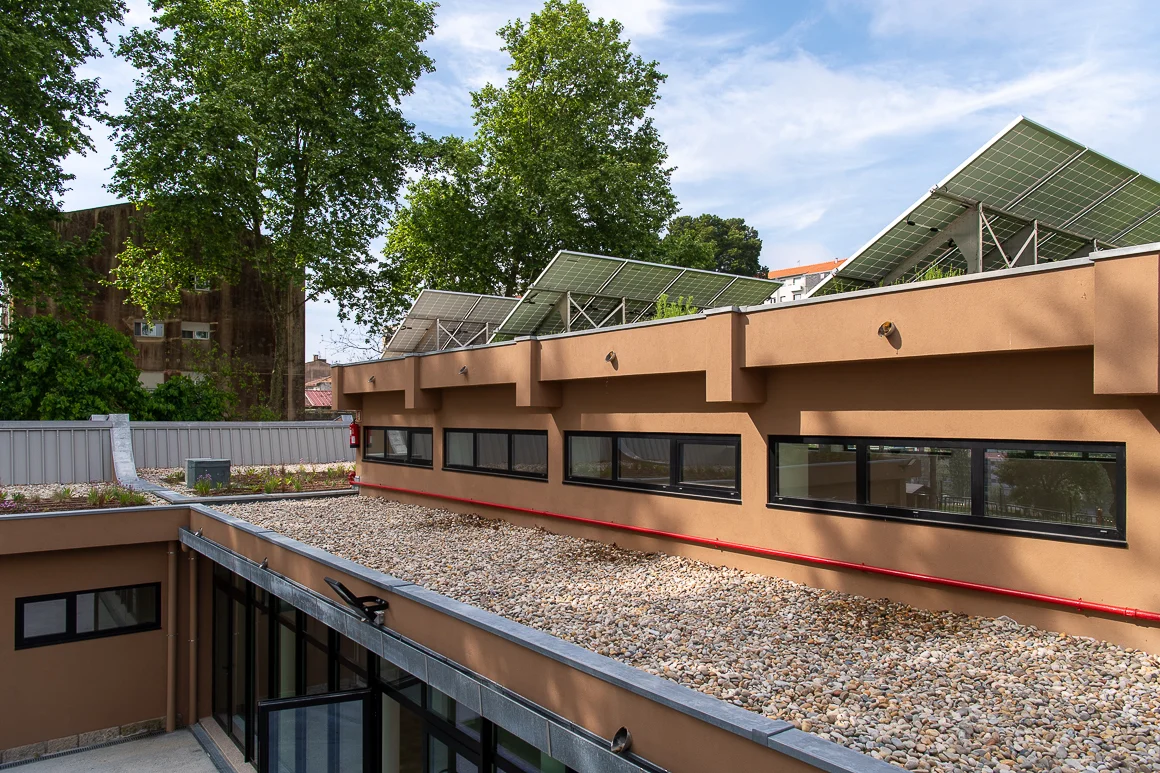
The Falcão Elementary School served as a pilot building to receive a set of nature based solutions specially designed and created to increase bioclimatic comfort indoors while enhancing resilience to climate change.
This school initially had problems such as thermal discomfort, due to the cement walls and roofs that accumulated heat in summer and lost energy in winter, compromising the indoor temperature and causing peaks in energy consumption, flooding caused by soil impermeability, rainwater losses to the rainwater system, dampness and leaks, and poor air quality.
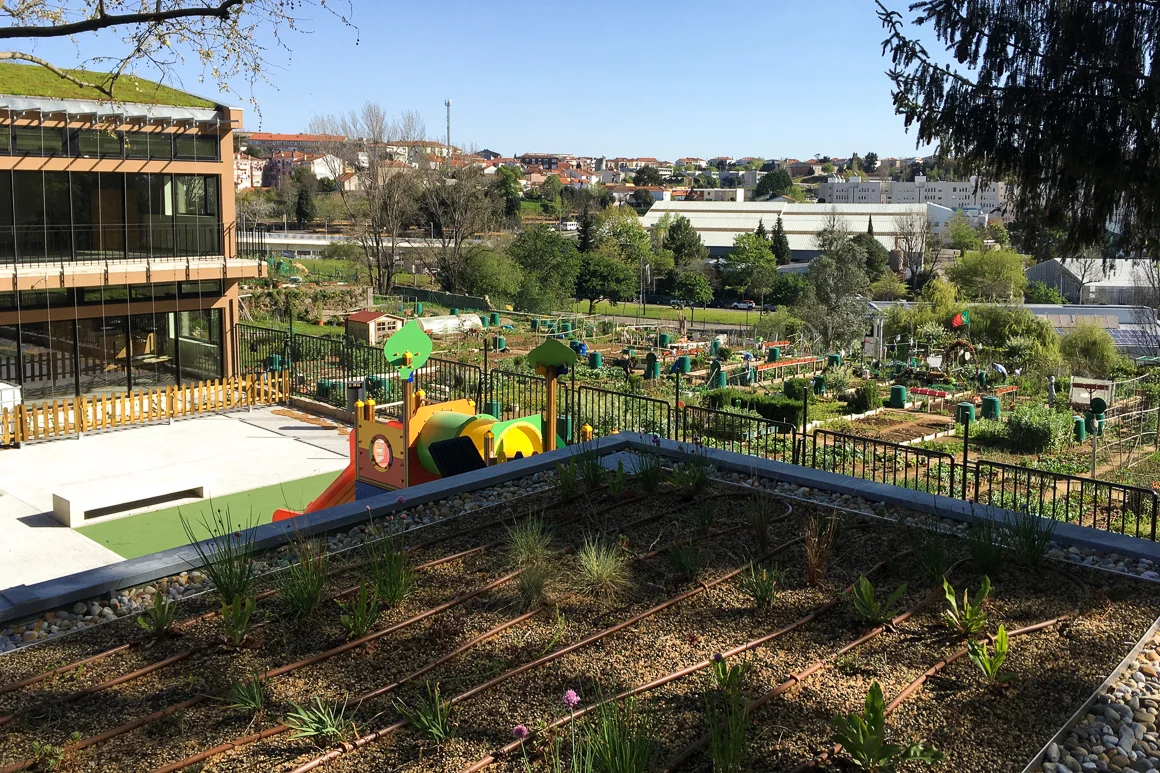
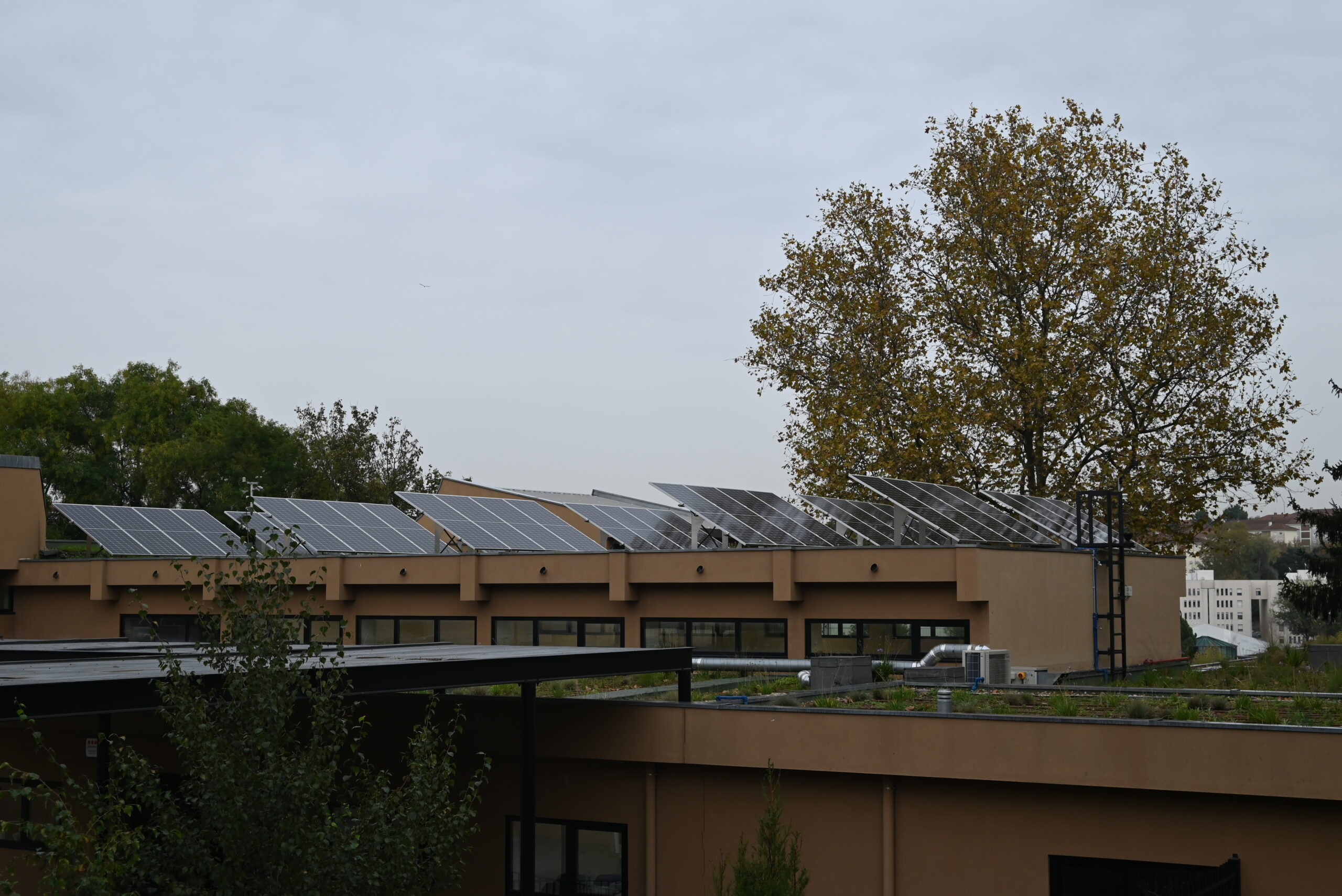
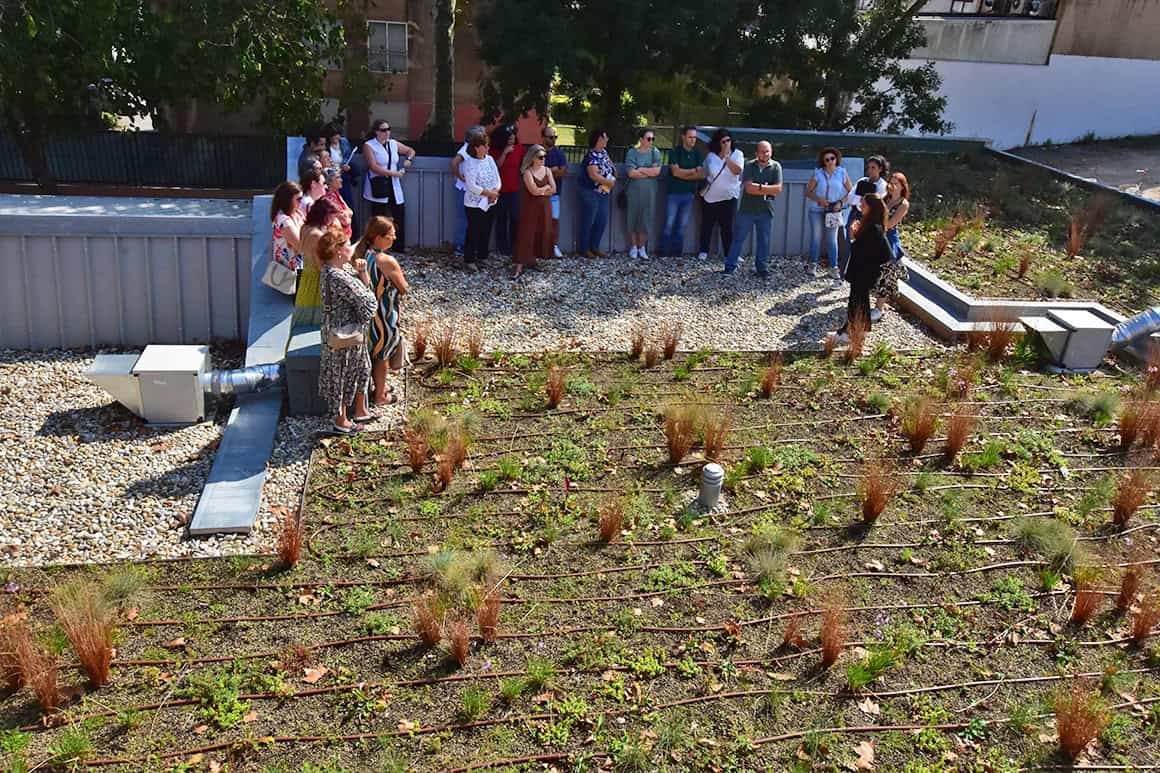
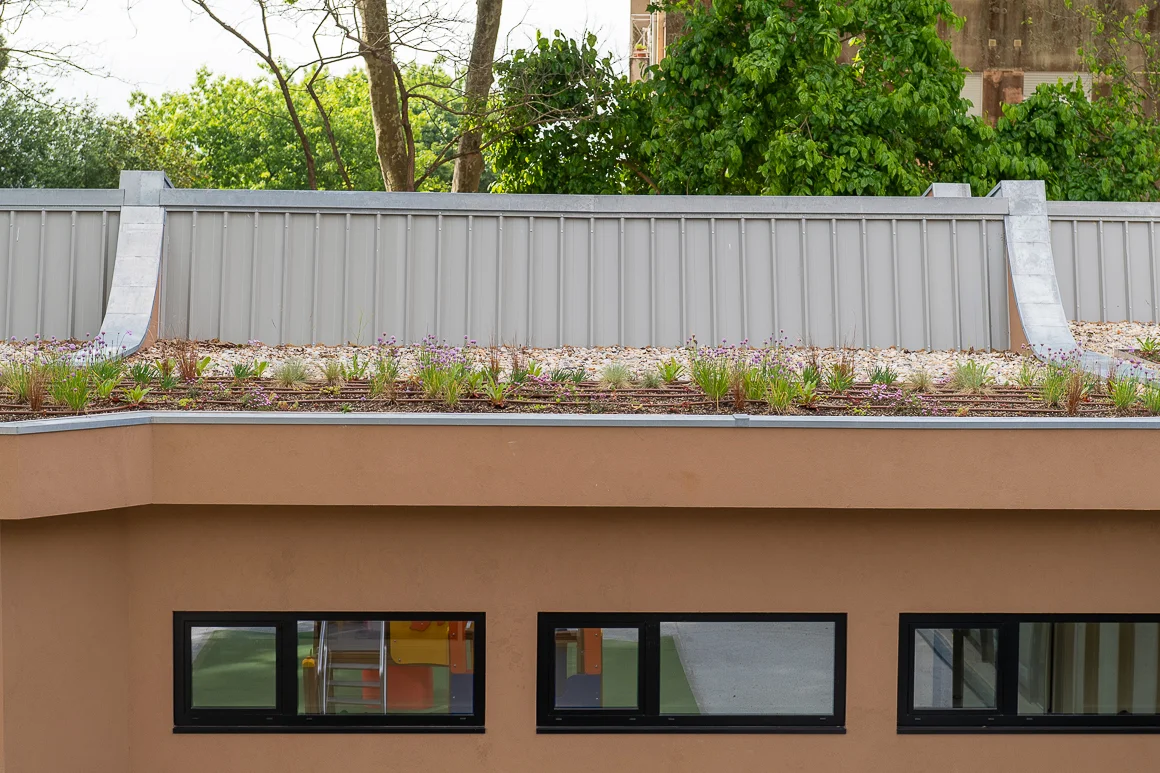
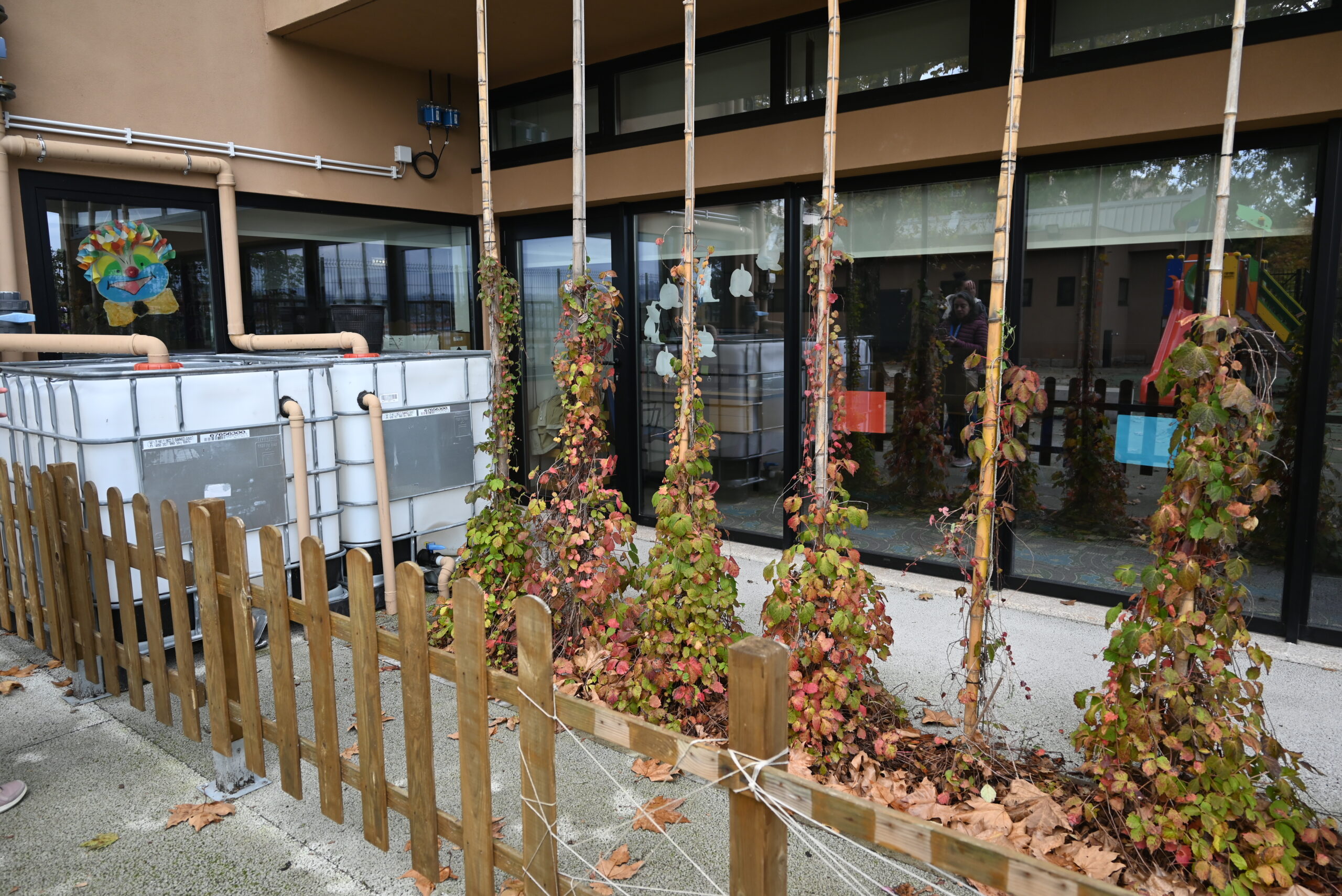
Given these difficulties, the main solutions implemented were: four green roofs with rainwater reuse systems, a green wall and photovoltaic panels for the production of electricity for self-consumption.
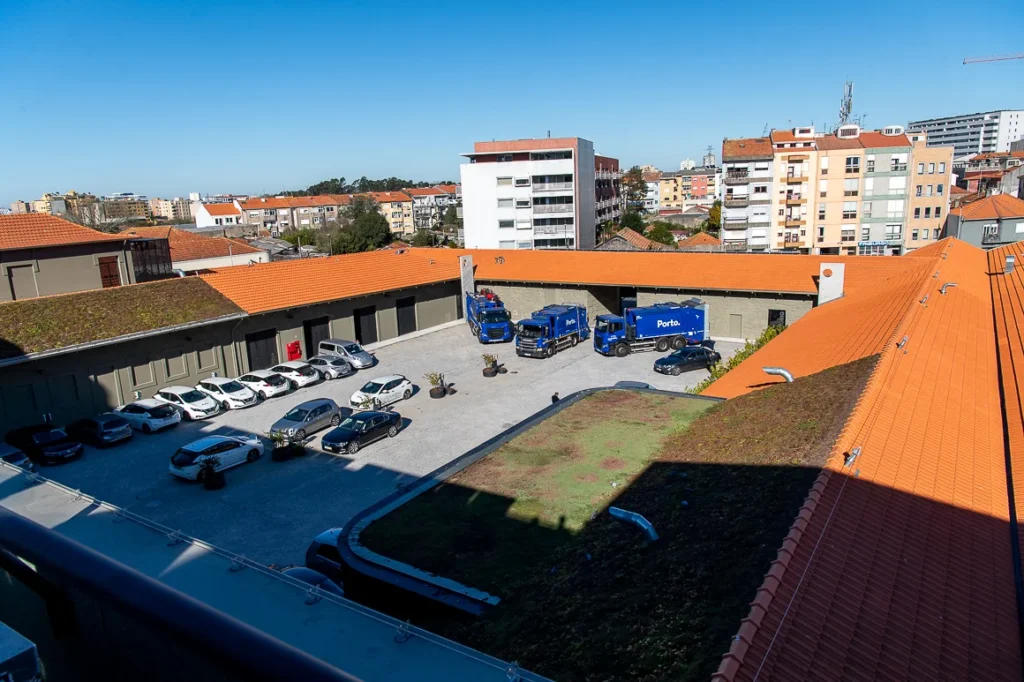
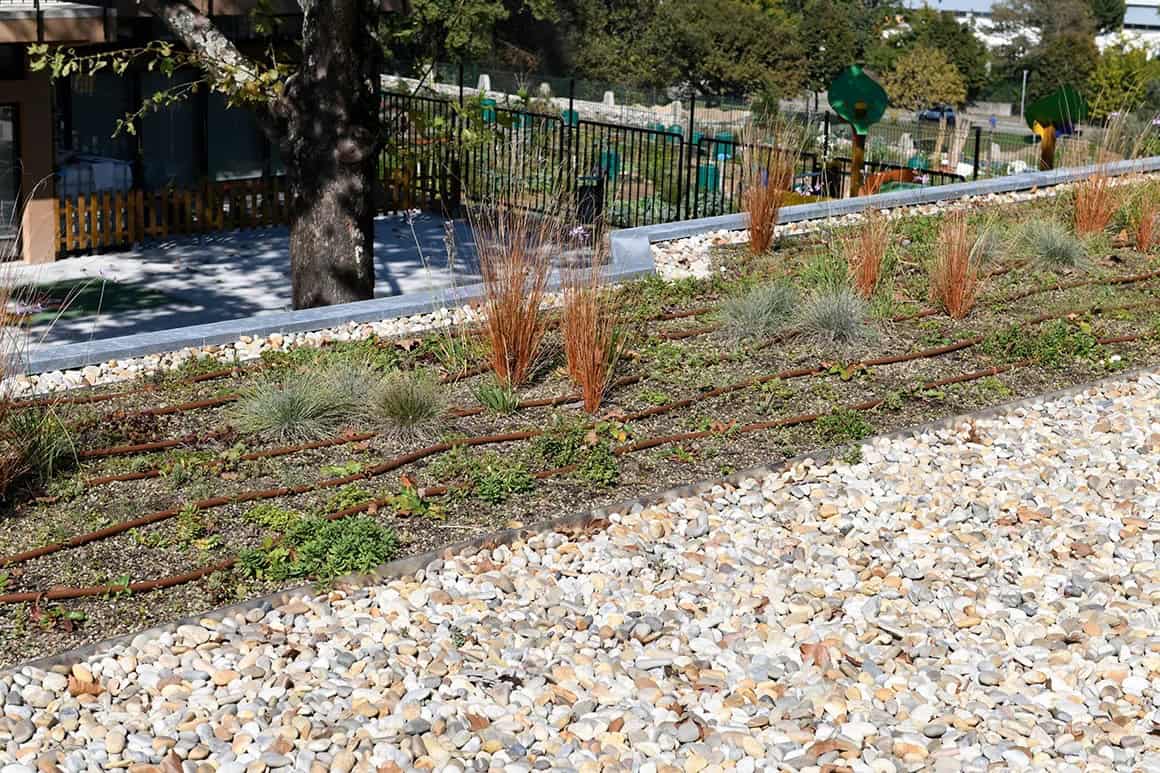
The green roofs cover more than 660 m² and consist of:
- A sloping roof – 38m² – consisting of 10cm of substrate and Sedum L.
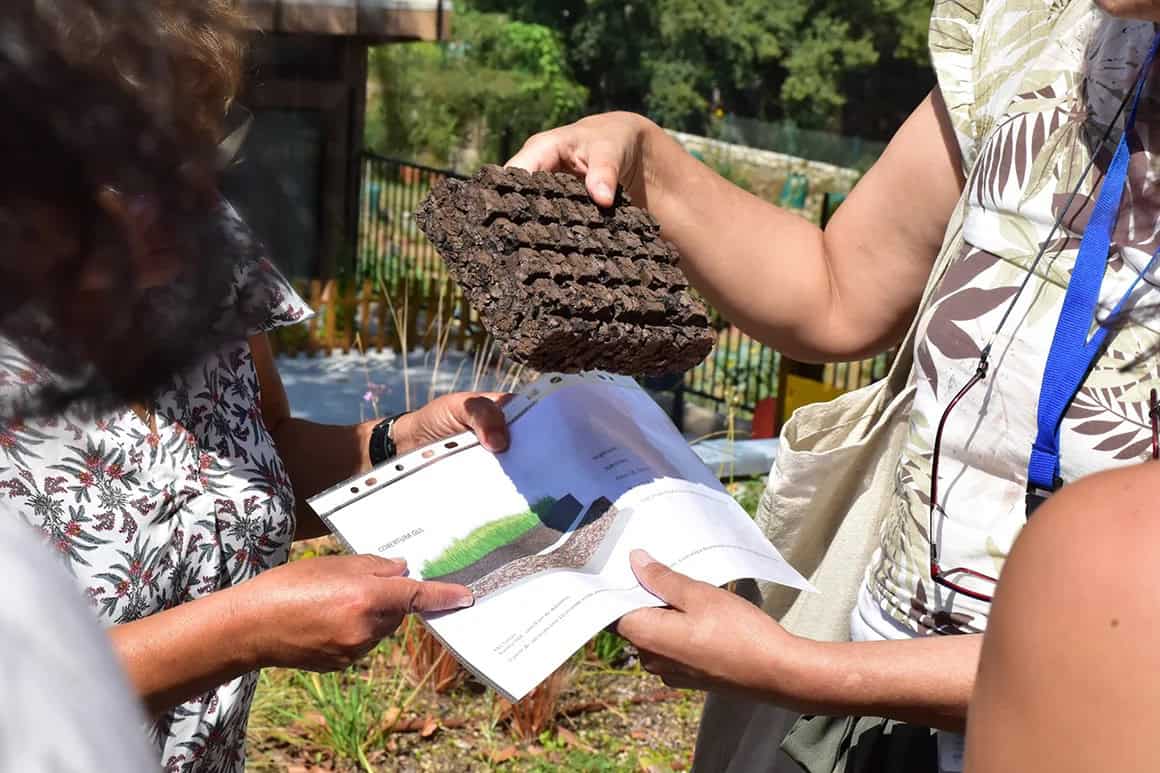
- Two GUL roofs – 400m² – using an innovative prototype based on the Green Urban Living system consisting of expanded cork agglomerate ICB (Insulation Cork Board) for thermal regulation. These roofs have a 12cm layer of substrate with herbaceous species to promote biodiversity (Allium schoenoprasum, Carex buchananii, Festuca amesthystina, Limonium vulgare, Satureja montana, Saponaria ocymoides, Sedum album, Sedum floriferum, Sedum sediforme, Sedum spurium, Petrorhagia saxífraga).
- A BioSolar Roof – 225m² – where the photovoltaic panels are installed. The roof has a 10cm layer of substrate planted with species such as Allium schoenoprasum, Carex buchananii, Festuca amesthystina, Limonium vulgare, Satureja montana, Saponaria ocymoides, Sedum album, Sedum floriferum, Sedum sediforme, Sedum spurium, Petrorhagia saxífraga.
The green wall is 6m high and 5,7m wide, covering a total area of 34,2m², and is composed of Parthenocissus tricuspidata, a deciduous species that provides shade in summer and allows natural lighting in winter.
The approximately 700 m² of green roofs and wall allow for natural cooling of the building in summer and insulation in winter, providing a lower temperature range and reducing consumption associated with heating and cooling artificial systems. In 8 months of records, a temperature decrease of 5,4°C was observed on the building’s roof.
These green roofs also contributed to reducing the risk of cracks and leaks by absorbing part of the impact caused by natural erosion.
The water collected by the roof collectors represents a reduction in rainwater loss from 30% to 3,74%. The water is then reused to feed a 28 m² natural pond located within the Horta da Oliveira community garden adjacent to the school, which was also created as part of this project, serving as a biodiversity reservoir for amphibians and aquatic macroinvertebrates and a living educational resource.
These solutions have led to a 169% increase in green areas, reaching a total surface area of 1.077 m². Twenty-six new species have already appeared in these new spaces, mainly flying insects, flies, mosquitoes, hymenoptera and some species of the genus Armadillium, which are indicators of habitat quality.
The green roofs were studied and analysed by the Associação Nacional de Coberturas Verdes (National Green Roof Association) as part of the Projeto Quinto Alçado do Porto (PQAP), whose main objective was to define a strategic model for integrating green roofs into the environmental and urban strategy of the city of Porto.
The interventions were carried out as part of the My Building is Green (mBiG) project. This project consists of adapting school and social service buildings to climate change in three very different climatic regions (Porto and Alentejo in Portugal and Badajoz in Spain).