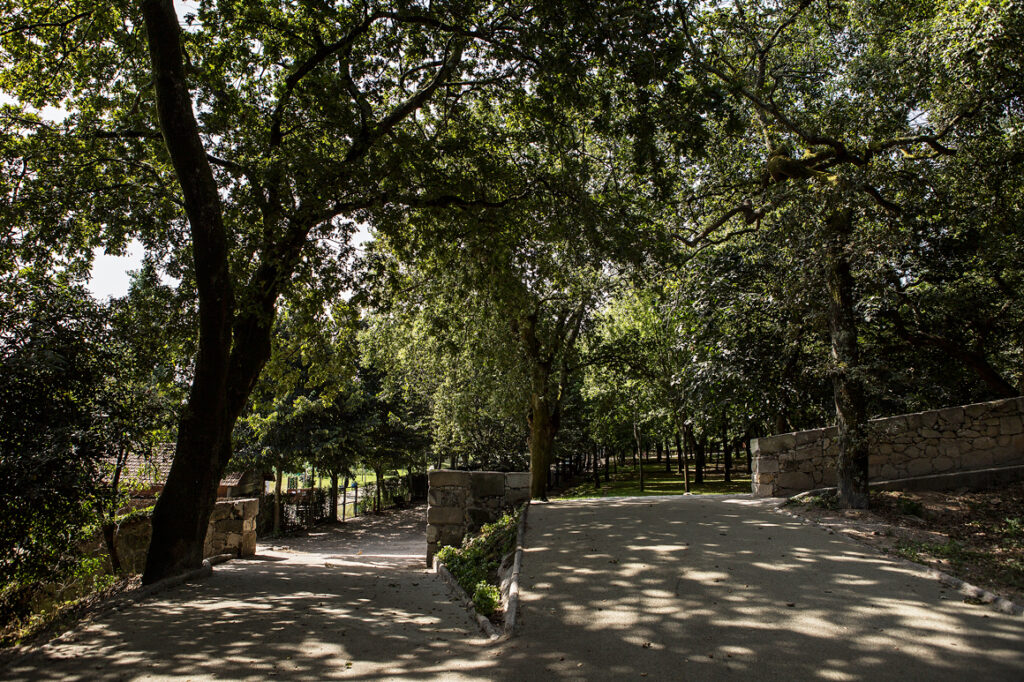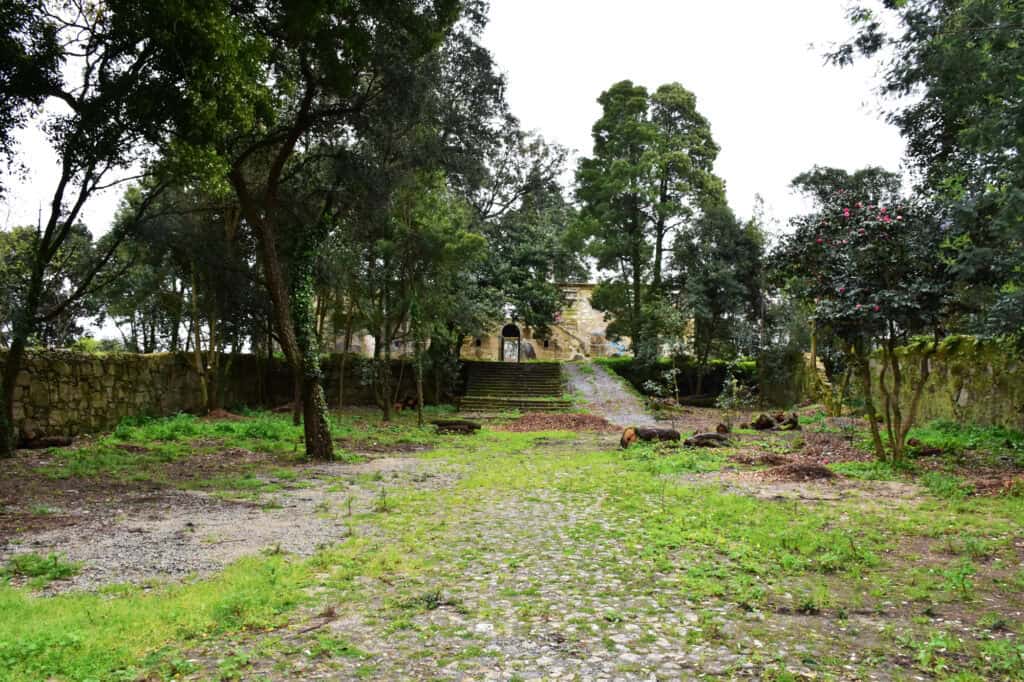
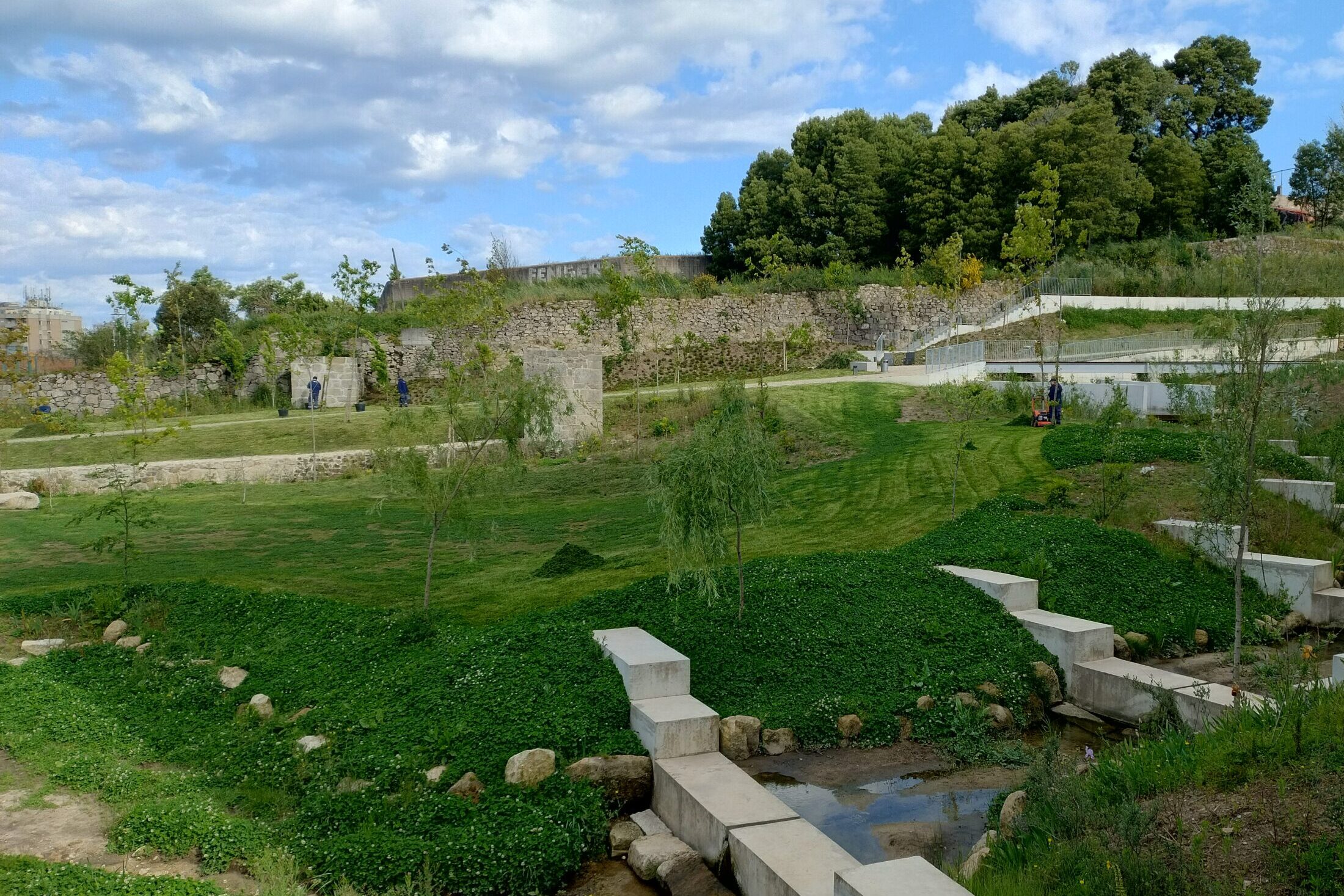
Located west of Morro da Lapa and Rua de Cervantes, this new 17,000 m² green space seeks to enhance urban quality of life, with a special focus on both the enhancement of public space and the city’s renaturalisation strategy.
Opened at the end of 2024 and based on the concept ‘Porto: a city designed by nature’, Parque Dr. Mário Soares highlights the wetland system as the ‘skeleton’ supporting the landscape and offers a diverse range of environmental functions.
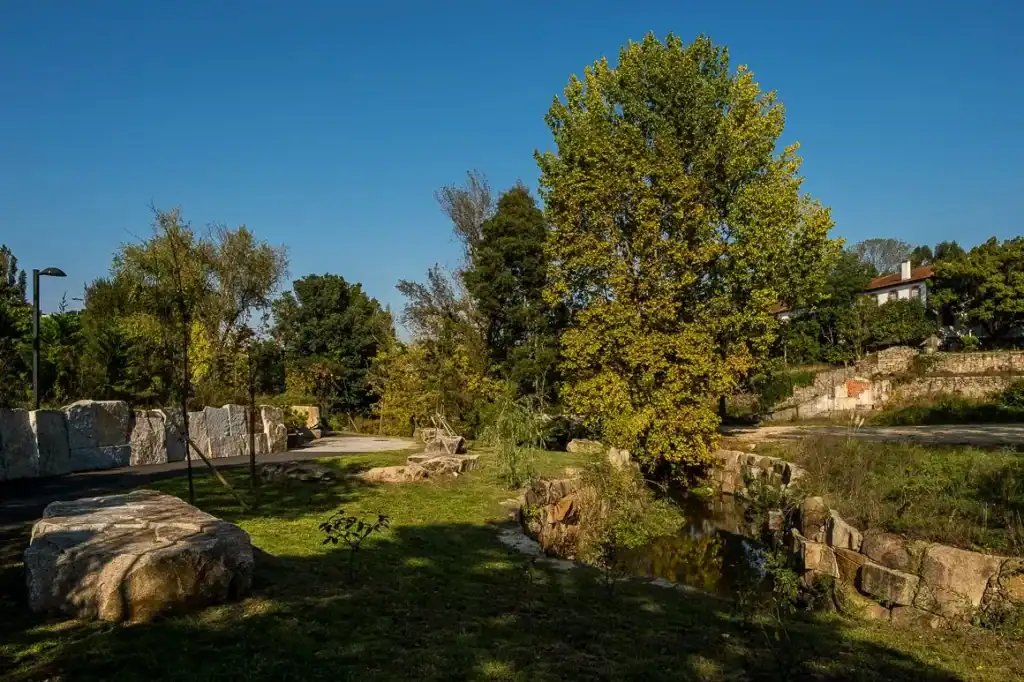
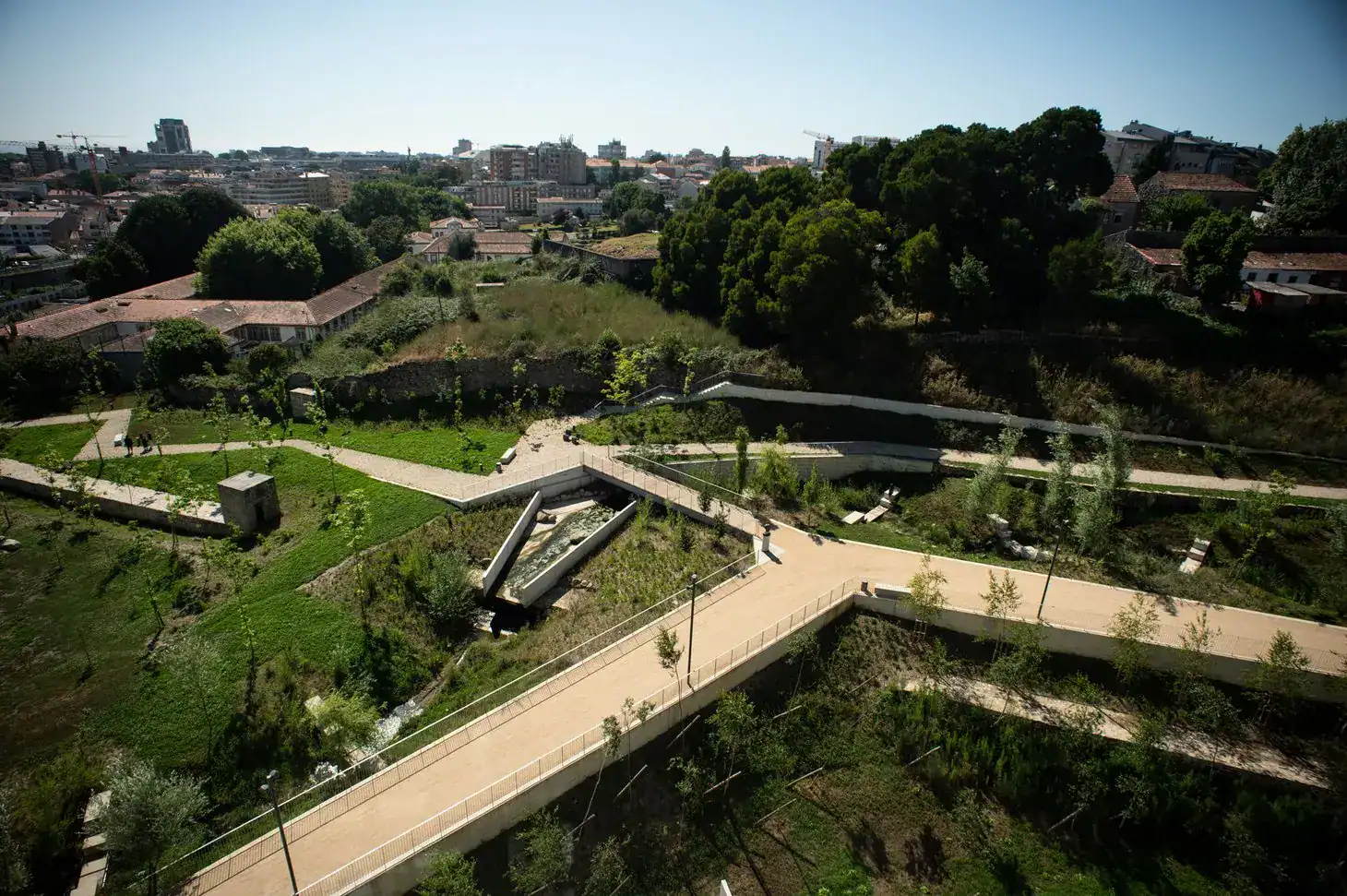
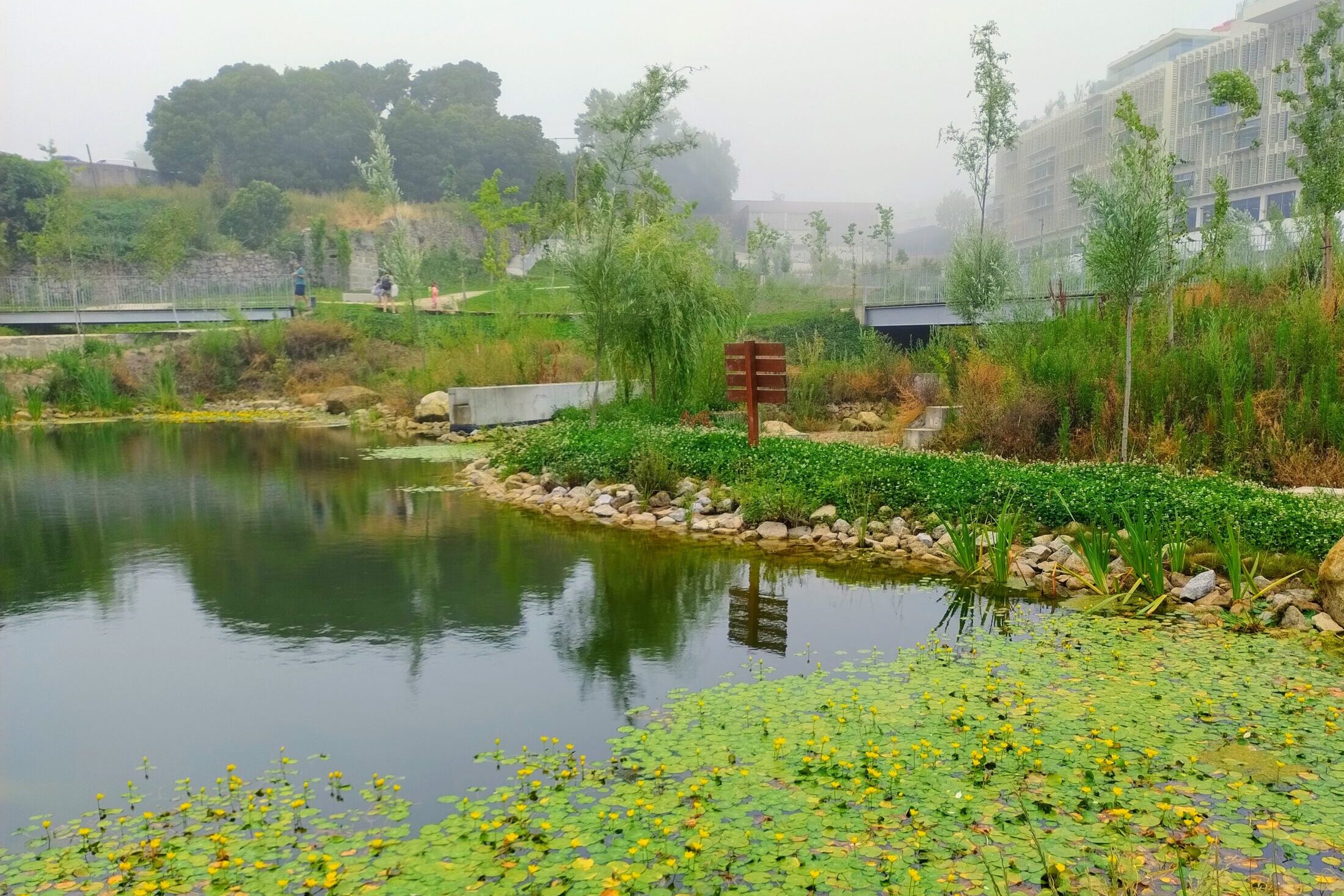
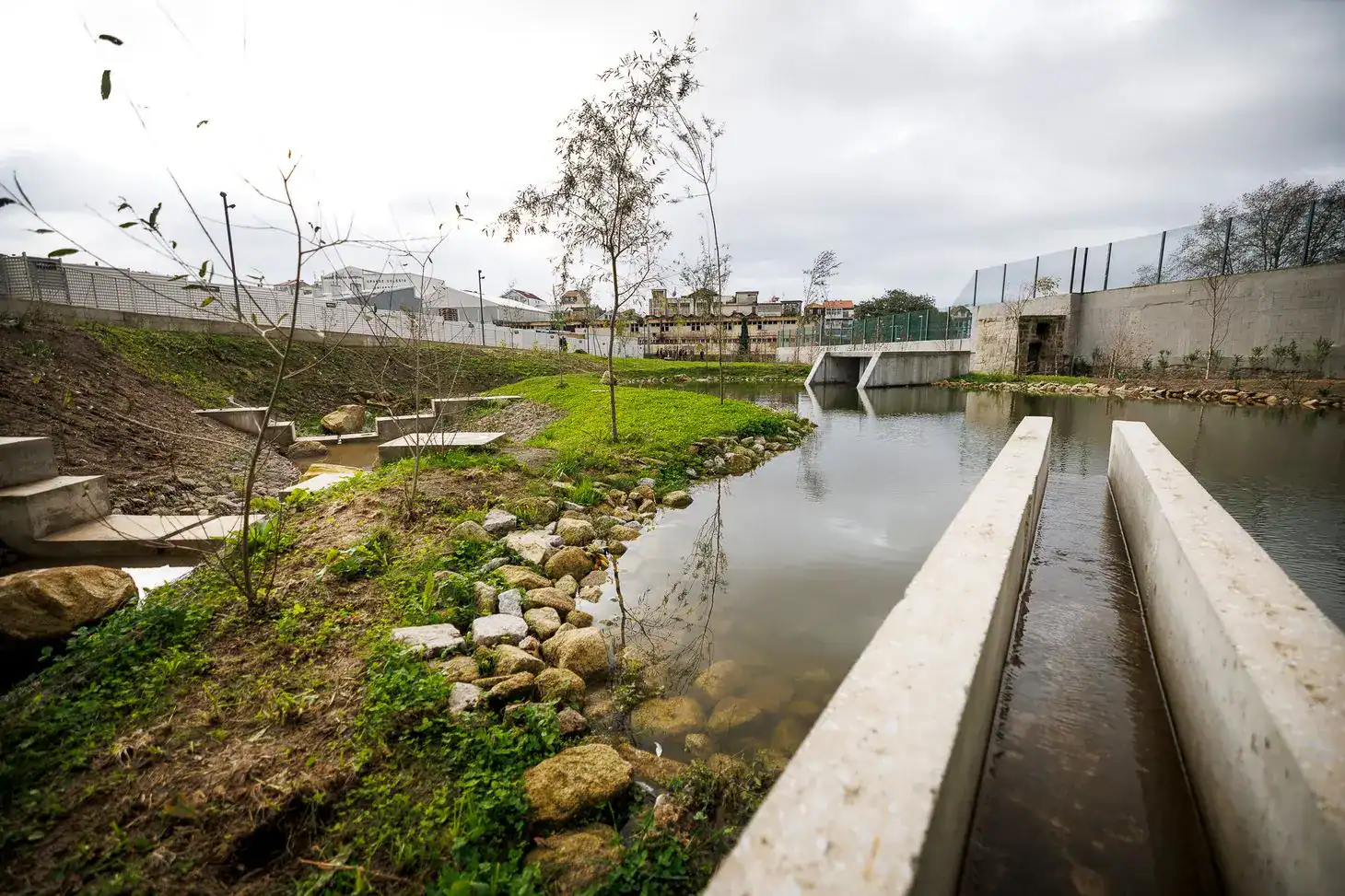
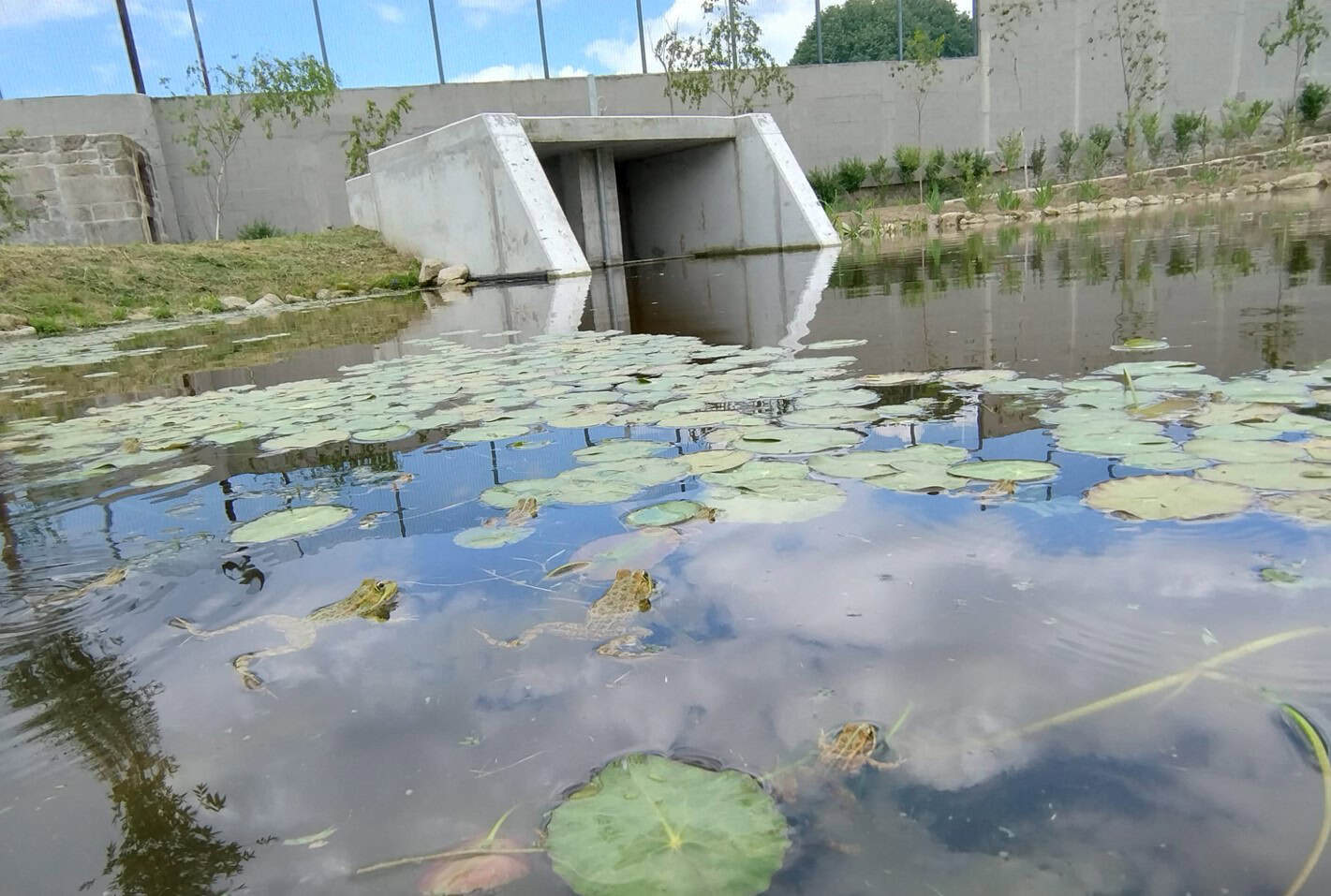
The renaturalisation of Ribeira do Vilar, which eliminated the piped section along Rua de Cervantes, reinforces the presence of water and promotes the use of retention basins that collect and infiltrate rainwater, thus preventing the risk of flooding. The watercourse was designed using natural solutions, stabilising the banks with rockfill and riparian vegetation structures. The permeable bed was maintained and micro-dams were installed to allow oxygenation of the water, simultaneously creating small ponds as a result of the damming. The meandering of the watercourse, the gargoyle over the spring, the micro-dams, the water channel and the lake have created a variety of rhythms and environments, enhancing the wetland system and the regeneration of the landscape.
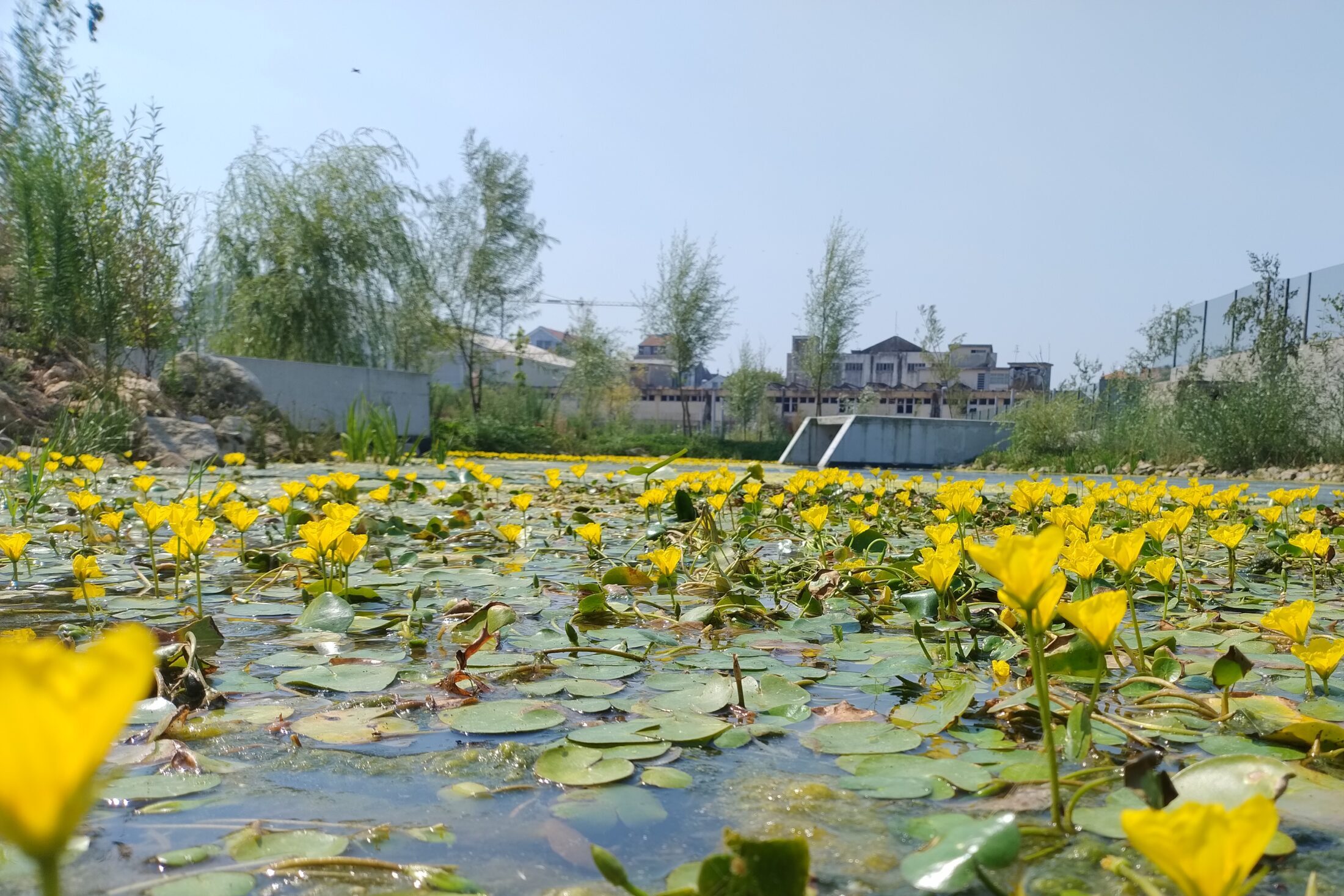
With the park’s concept adjusted to the waterway, the purpose of transforming the natural shell into a biodiversity refuge becomes apparent. The creation of a riparian gallery along the watercourse, with vegetation cover and a marginal design with inert materials, provides shelter for birdlife and habitat regeneration, while also contributing to carbon sequestration and improved air quality.
This place was part of the 2025 educational project ‘Noites de Morcegos’ (Bat Nights), where it was possible to observe many individuals of the pipistrelle bat species (Pipistrellus pipistrellus). These data highlight the importance of this type of urban space for these animals, which are excellent bioindicators due to their sensitivity to environmental changes (their presence indicates good conditions in urban and rural ecosystems).
Fed by rainwater and water from the watercourse, the lake plays a crucial role in regenerating biodiversity. The rehabilitation of the stream and the construction of the retention basin and pond were carried out by the Municipality, in partnership with CIIMAR.
Highlighting the advantages of the project in terms of sustainable mobility and proximity, the park connects the Lapa metro station, the Bouça urbanisation and Rua da Boavista, at the lower level, with Rua de Cervantes and Rua de Alves Redol, at the higher level. In addition to the more structured panoramic route, which runs through the Park in a north/south direction with anchors to the east, the green space also includes an informal route to the west of the Salgueiros spring.
The renaturalisation of watercourses, the application of natural-based solutions in public spaces and the promotion of green spaces linked to the tree network are the guiding principles of an ecosystemic vision for the city.