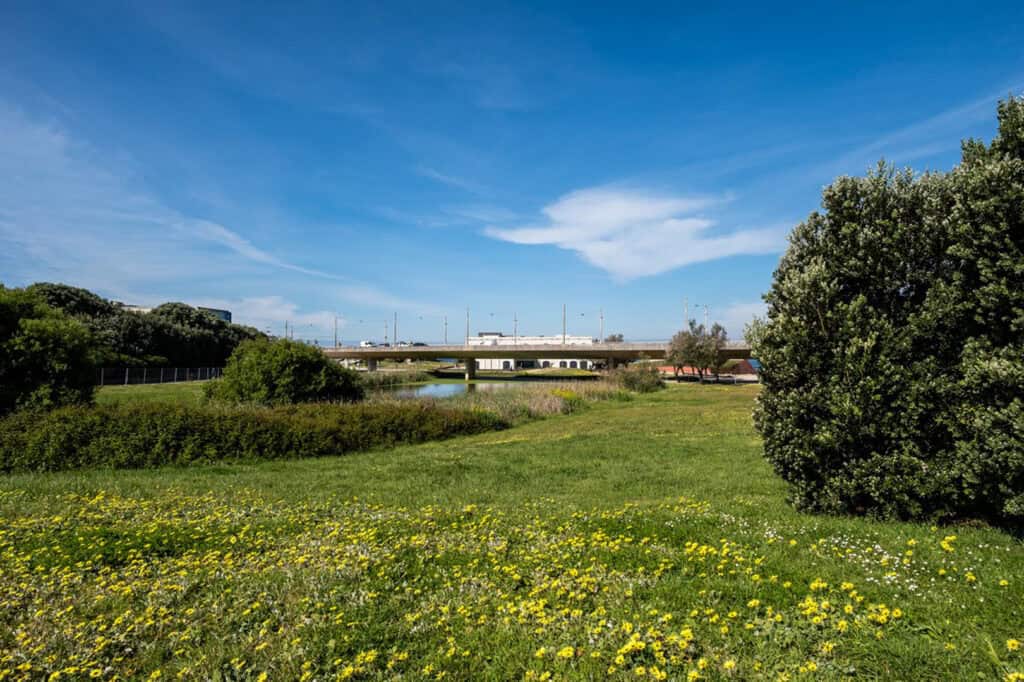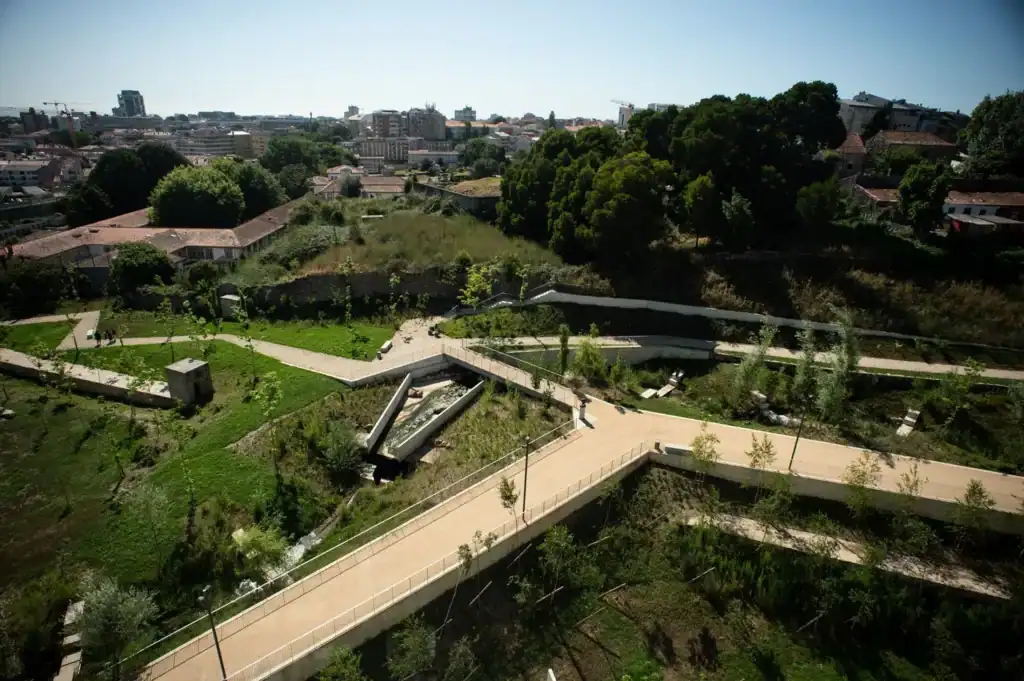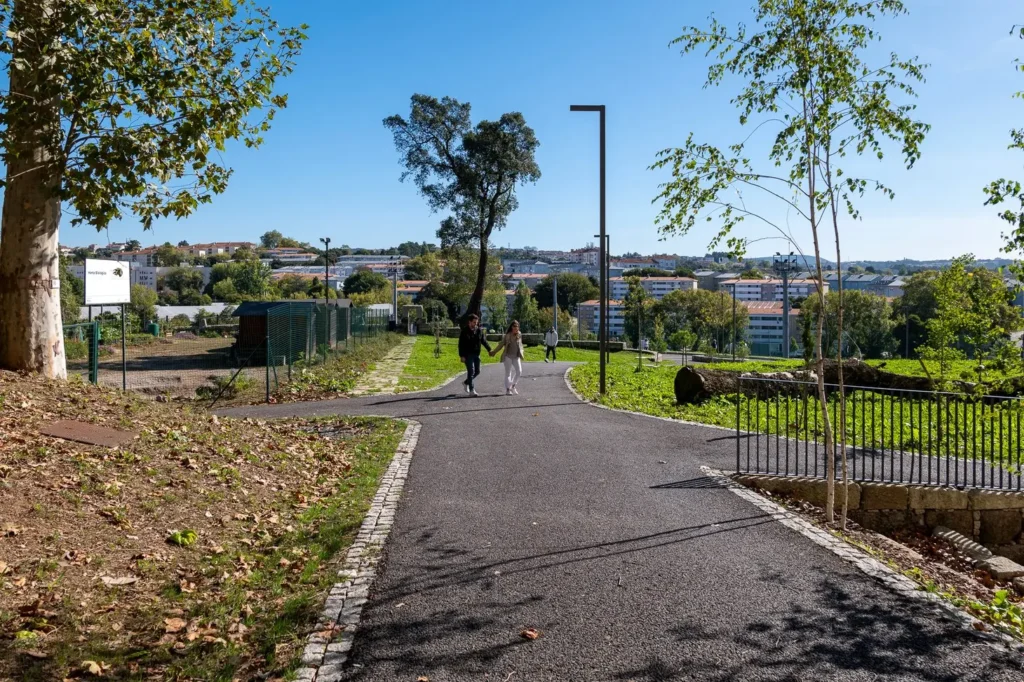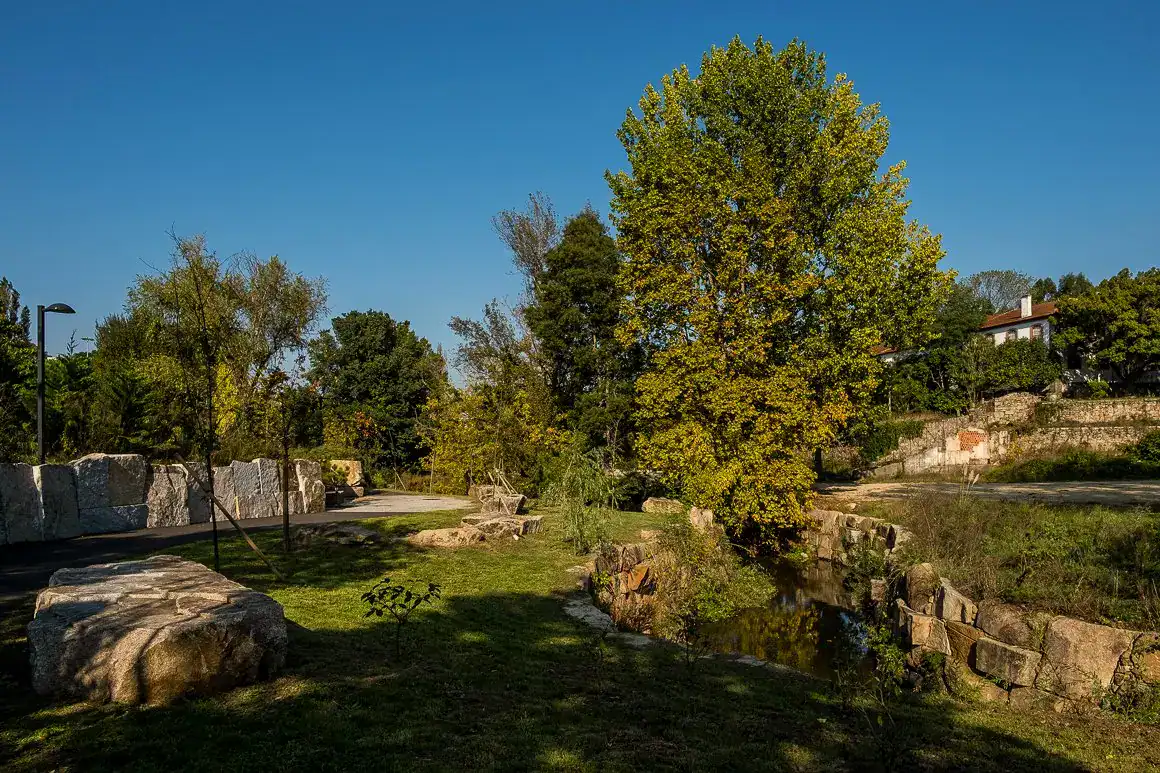
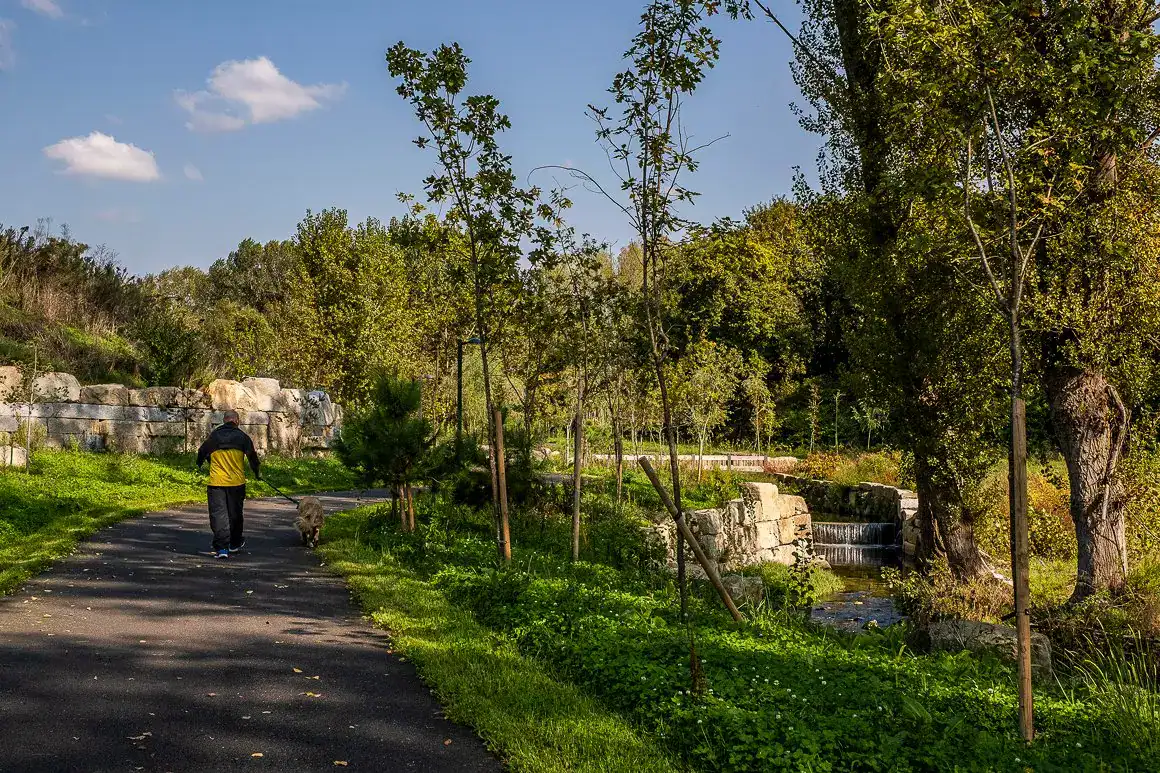
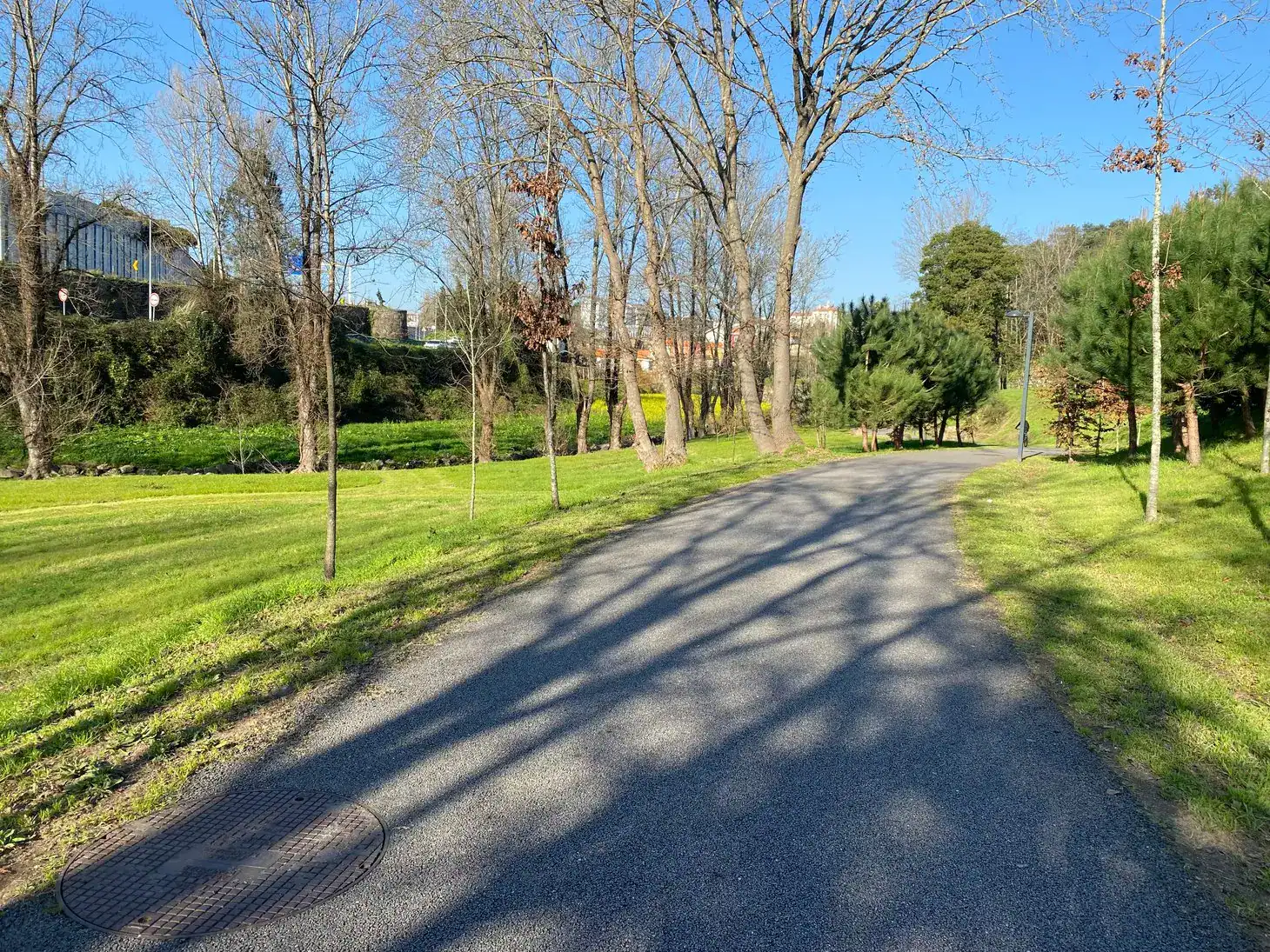
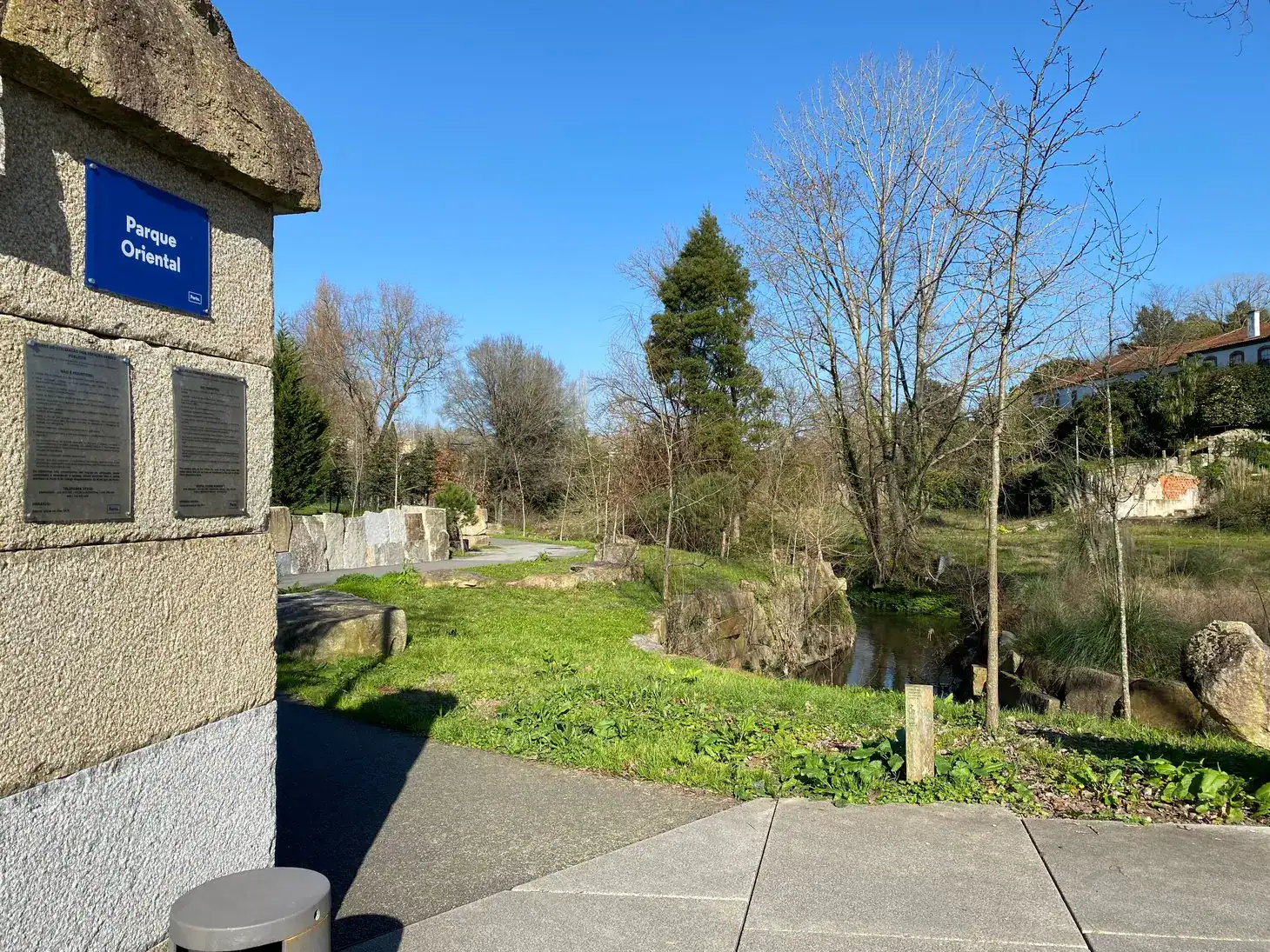
The Parque Oriental, located in Campanhã, is Porto’s second largest park, following Parque da Cidade.
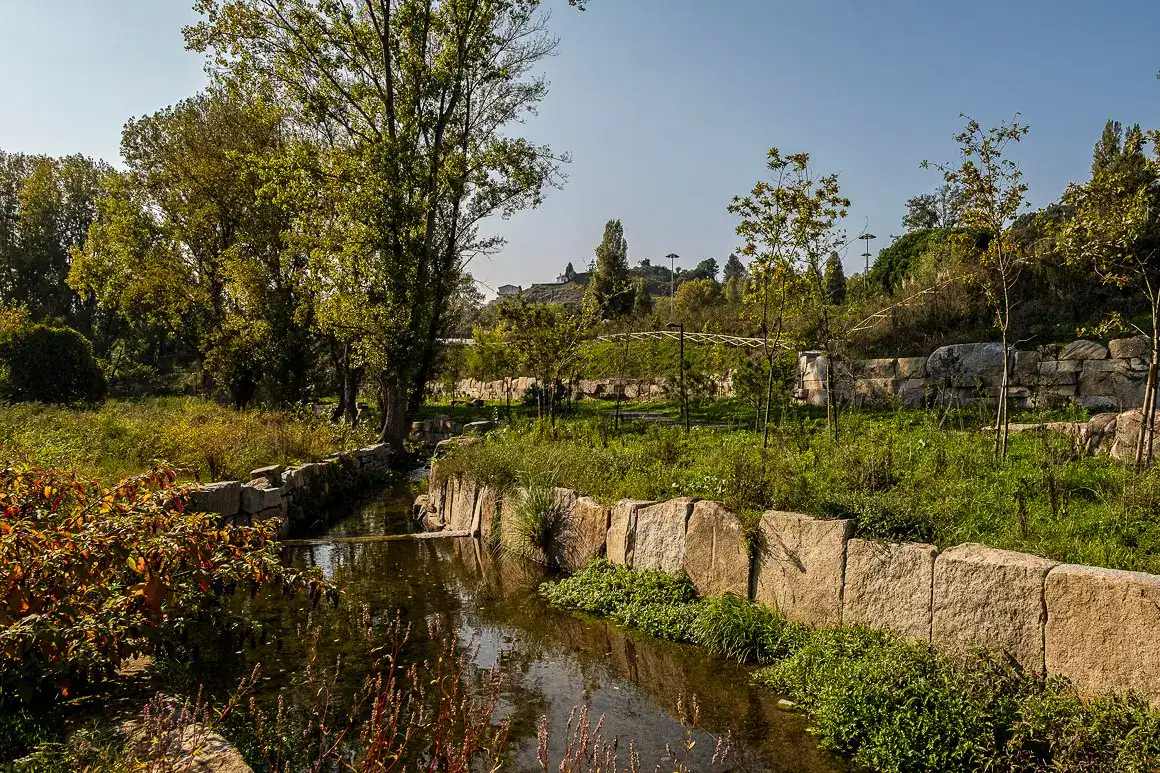
Designed by architect Sidónio Pardal, a linear park was developed along the banks of the Rio Tinto, with a total of 16,7 hectares of green space, from Freixo to Pego Negro, where there are several footpaths and cycle paths. Currently, through these paths, Parque Oriental is connected to Parque da Alameda de Cartes, in a vision of a more connected Porto.
Through the rehabilitation of Rio Tinto in 2016, it was possible to expand the Park, initially covering 8,7 hectares, by a further 8 hectares of green space where a range of tree species (evergreens and conifers) and various shrub species were introduced. In addition, stone pines, Pedunculate oak, Cupressocyparis leylandii, beeches, willows, azaleas, camellias and rhododendrons dominate the entire path, accentuating the linear structure of the park. This diversity will also accentuate the contrasts between sections of the path throughout the seasons, exploiting the effects of foliage colour and flowering and giving the park’s landscape a dynamic and fractal feel.
The more than 16ha of green areas provide various ecosystem services that simultaneously contribute to improving air quality, thermal regulation, watercourse use, promoting biodiversity, and facilitating rainwater retention and infiltration into the water table.
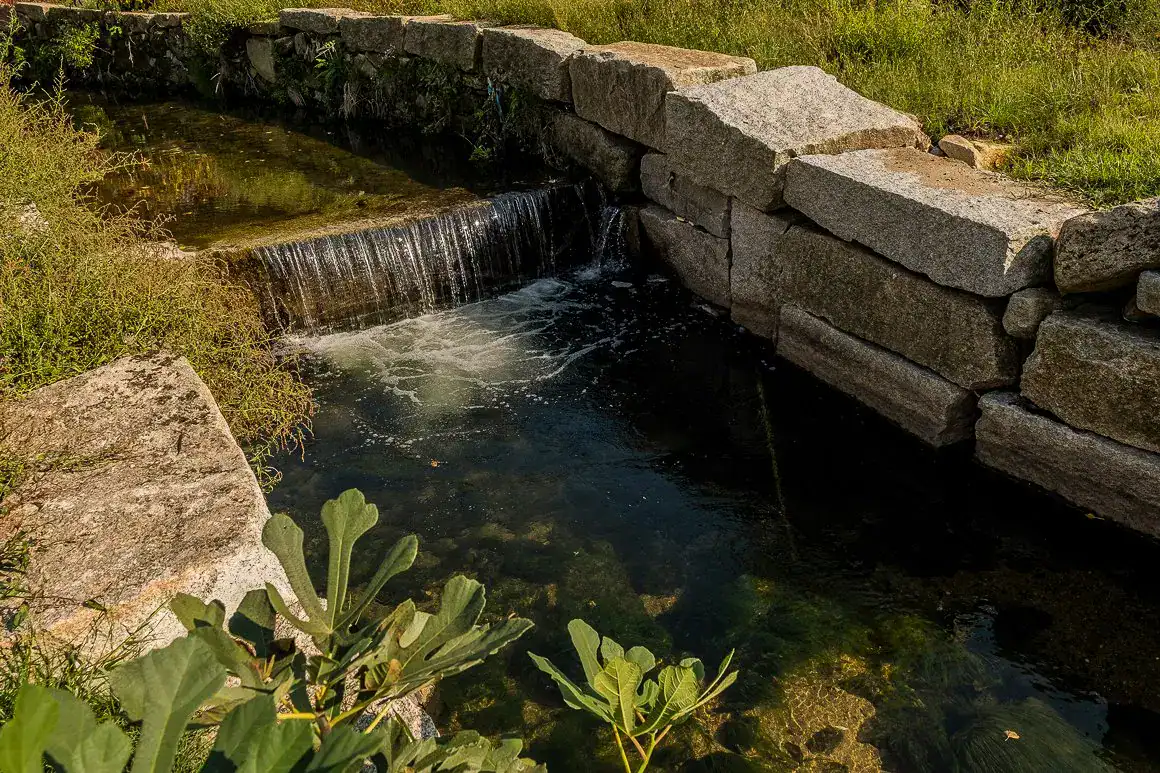
The clean-up and rehabilitation programme of the Rio Tinto was completed with the construction of its interceptor in 2019, allowing the once extinc profession of river guard to be revived. In partnership with LIPOR, these professionals carry out inspections and maintenance in the Parque Oriental and investigate the presence of pollution in the watercourse and its banks, with the aim of prioritising the preservation of the ecosystem and biodiversity. Since 2019, ducks, salamanders and newts have been spotted in this watercourse.
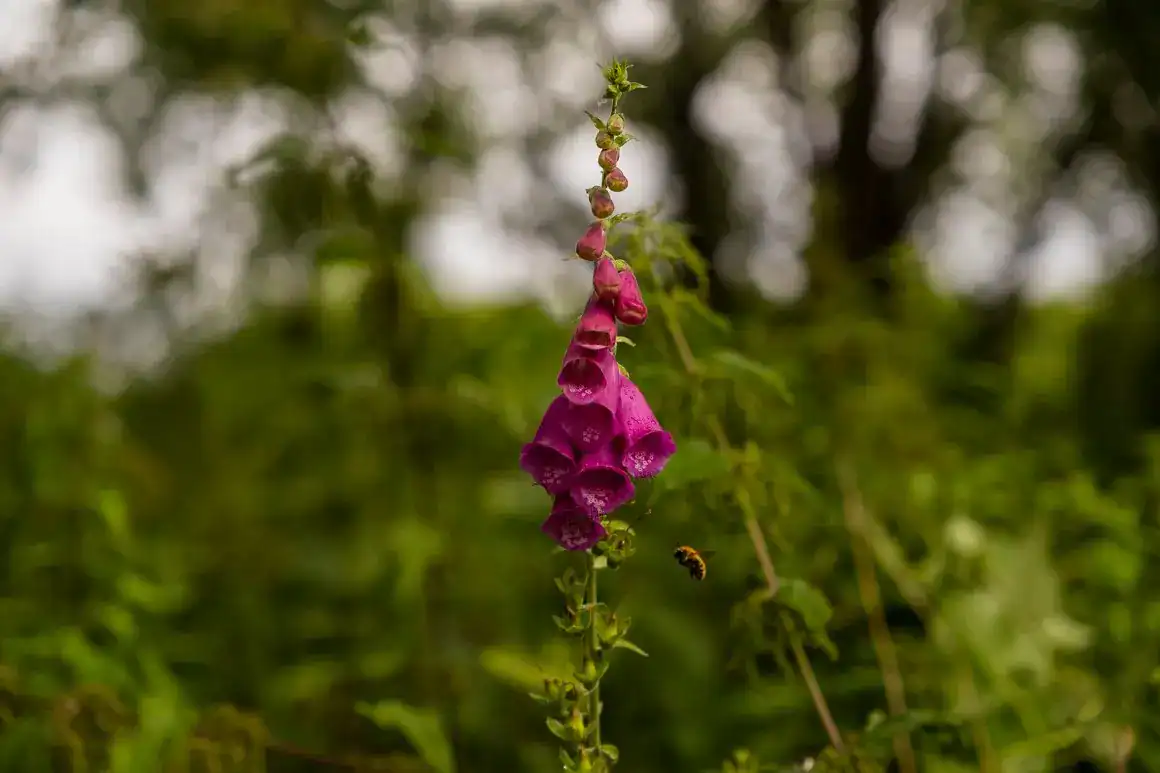
Since 2021, the ‘Os Polinizadores do Parque’ project has been responsible for defining maintenance practices for the park’s green areas with the aim of creating conditions to attract and sustain pollinating insect communities. Combining three areas of knowledge (landscape architecture, botany, and entomology), the strategy of this project involves changing maintenance practices to allow annual and biennial plants to complete their reproductive cycle and, thus, allow animals, especially pollinating insects, to enjoy the floral resources.
As for vegetation, since 2021, the ‘Os Polinizadores do Parque’ project has been responsible for maintaining the park’s green area with the aim of creating conditions to attract and sustain pollinating insect communities. Combining three areas of knowledge (landscape architecture, botany and entomology), the strategy of this project involves changing maintenance practices to allow annual and biennial plants to complete their reproductive cycle and, in this way, allow animals, especially pollinating insects, to enjoy the floral resources. Insects such as honey bees, bumblebees, solitary bees, wasps, syrphids, other flies, butterflies, moths and beetles can be observed in the park.
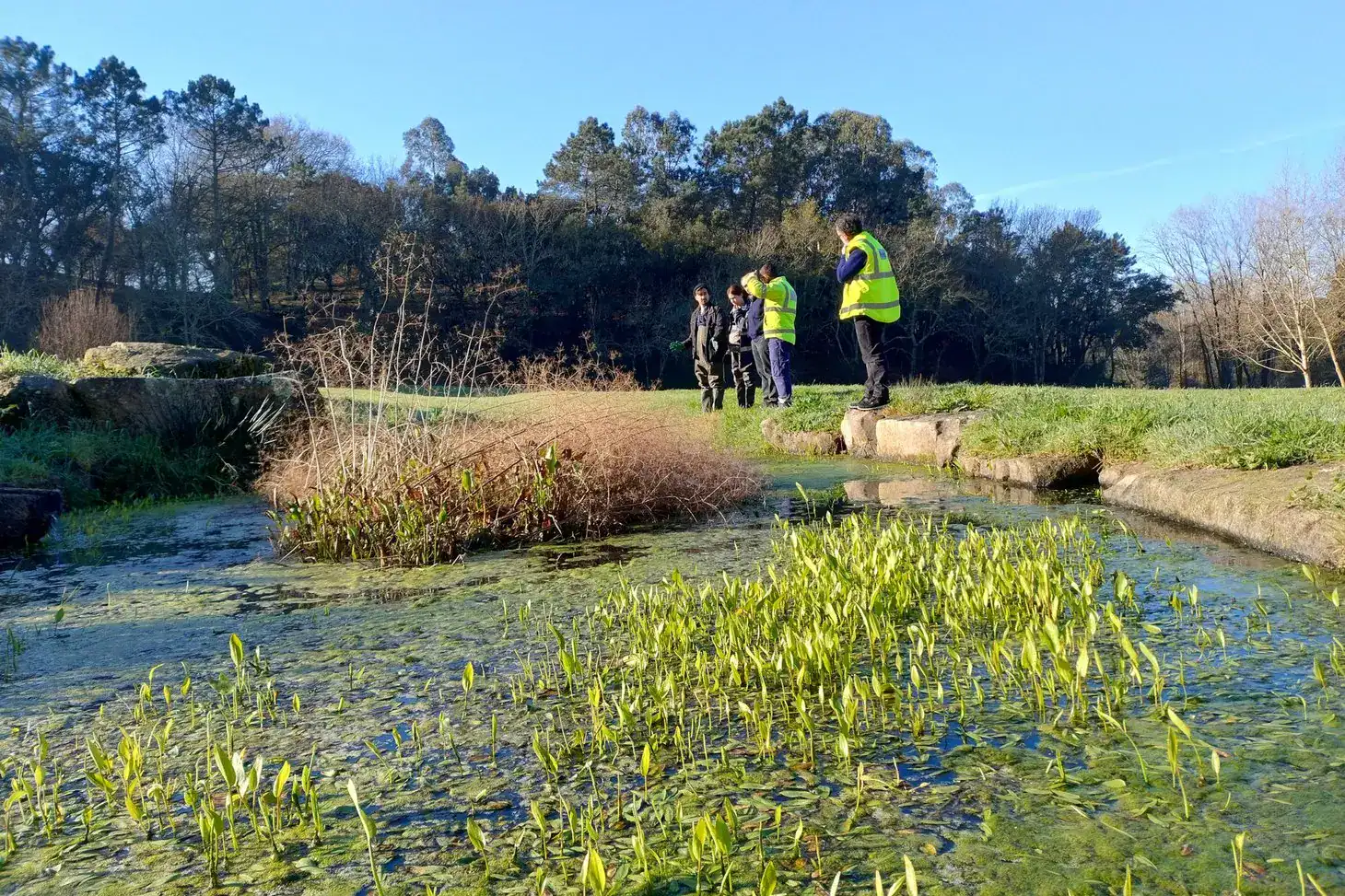
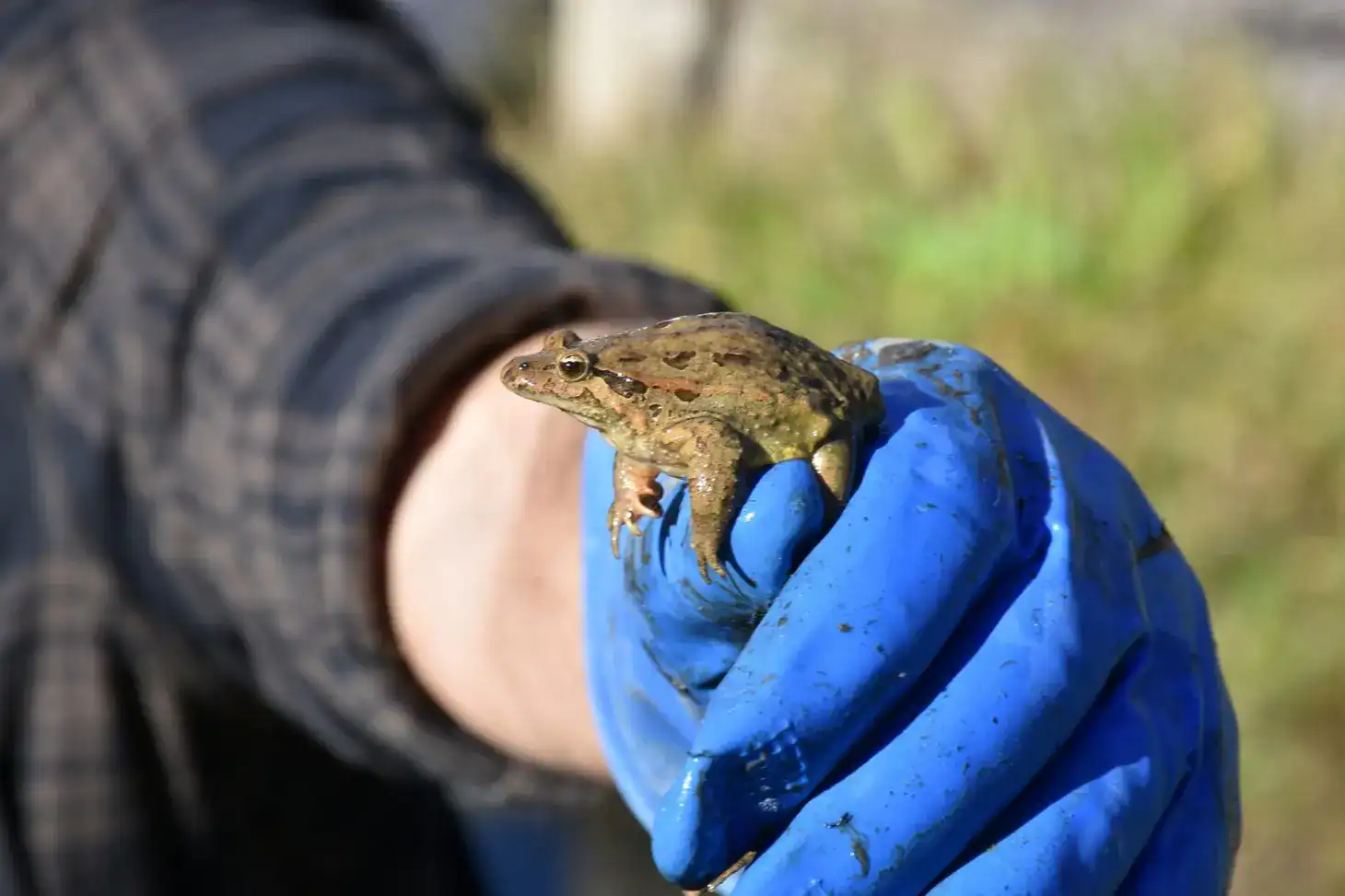
This park also incorporates a pond, built in partnership with CIIMAR as part of the MoRe Porto project, now Água com Vida Porto, which promotes the biodiversity of fauna and flora in aquatic environments and ensures the protection of species such as the Iberian painted frog (Discoglossus galganoi), an amphibian with endangered status and limited presence in urban areas.
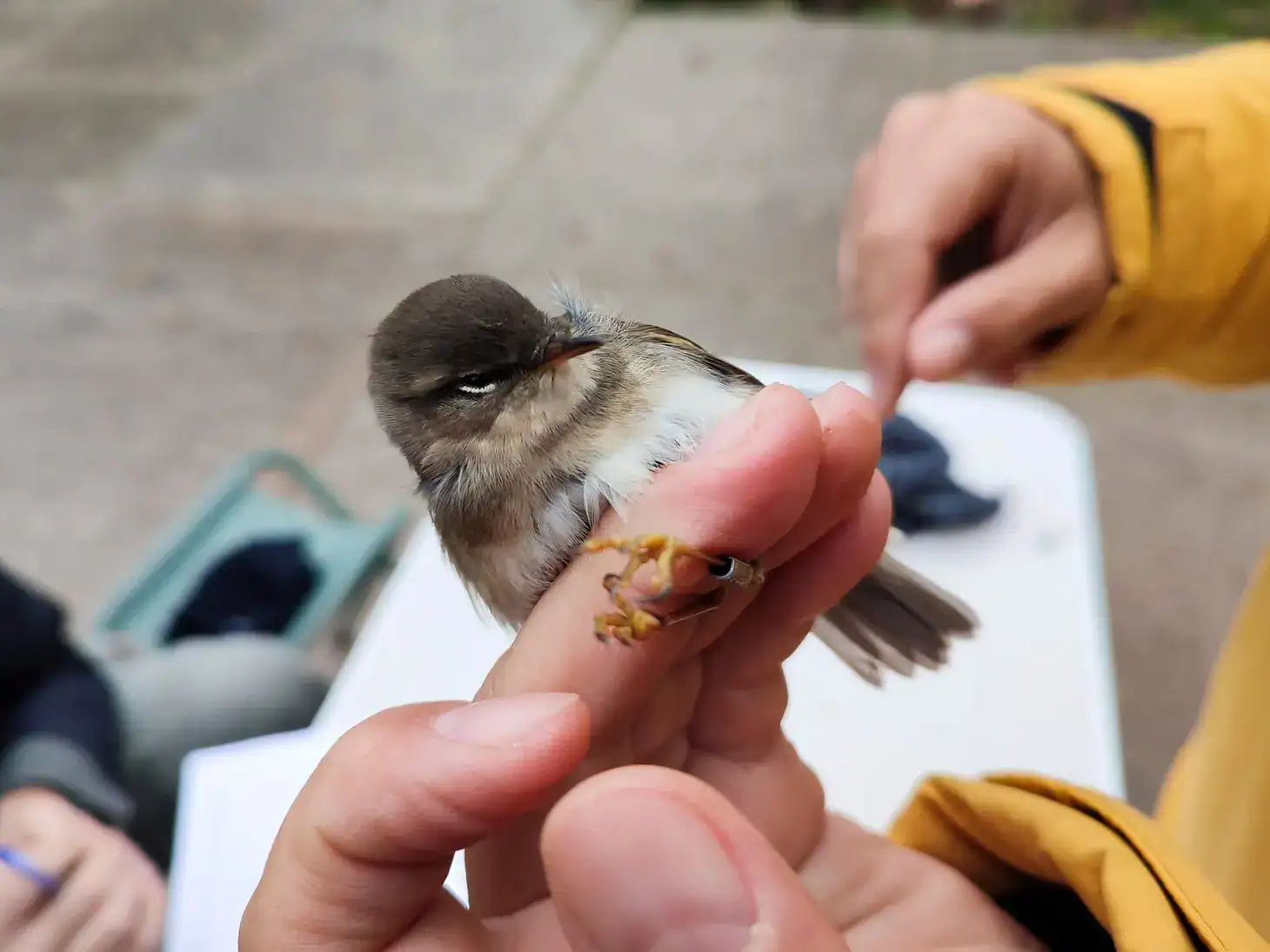
As a result of its diverse biodiversity, Parque Oriental is home to many species of fauna and therefore hosts several project sessions such as Noites de Morcegos and Anilhagem Científica de Aves. In December 2025, following one of these sessions, a dusky warbler (Phylloscopus fuscatus) – a bird that is very rare in Portugal and originates in Asia – was ringed and returned to the wild. This example highlights the importance of green spaces in urban environments.