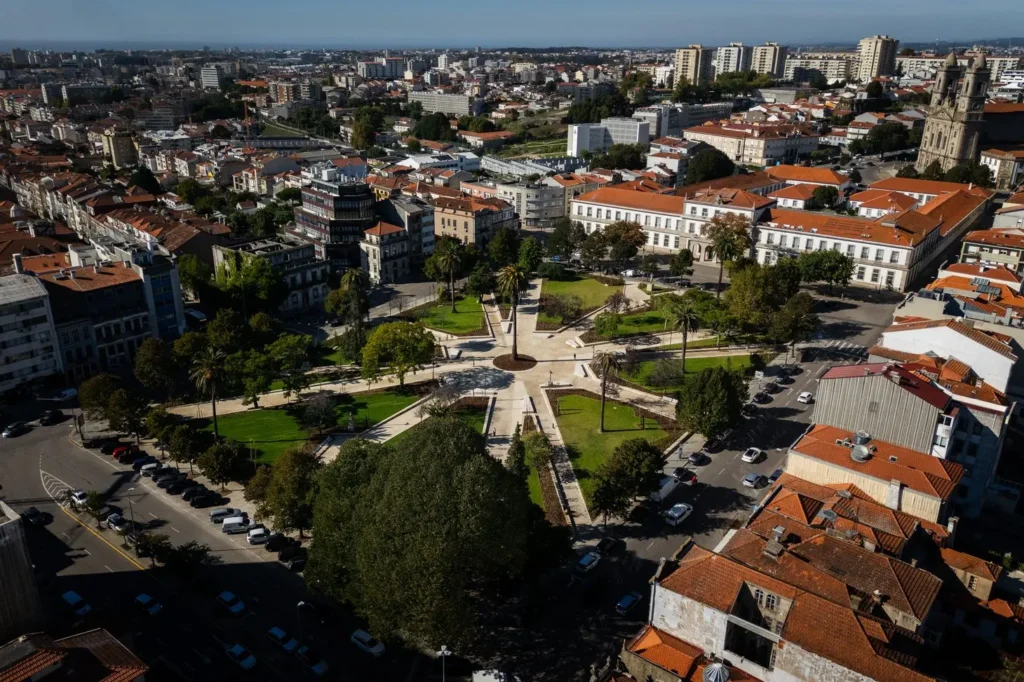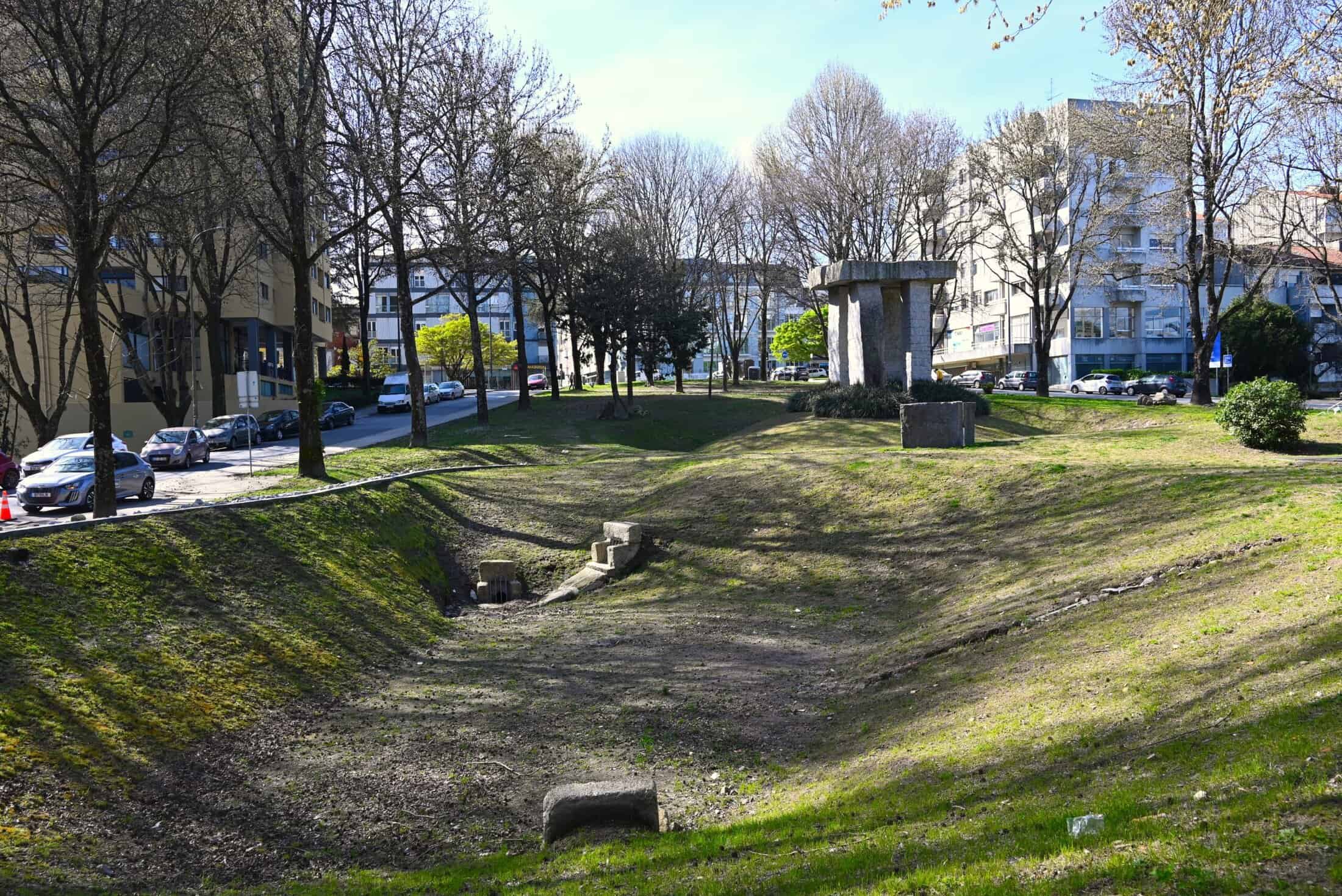
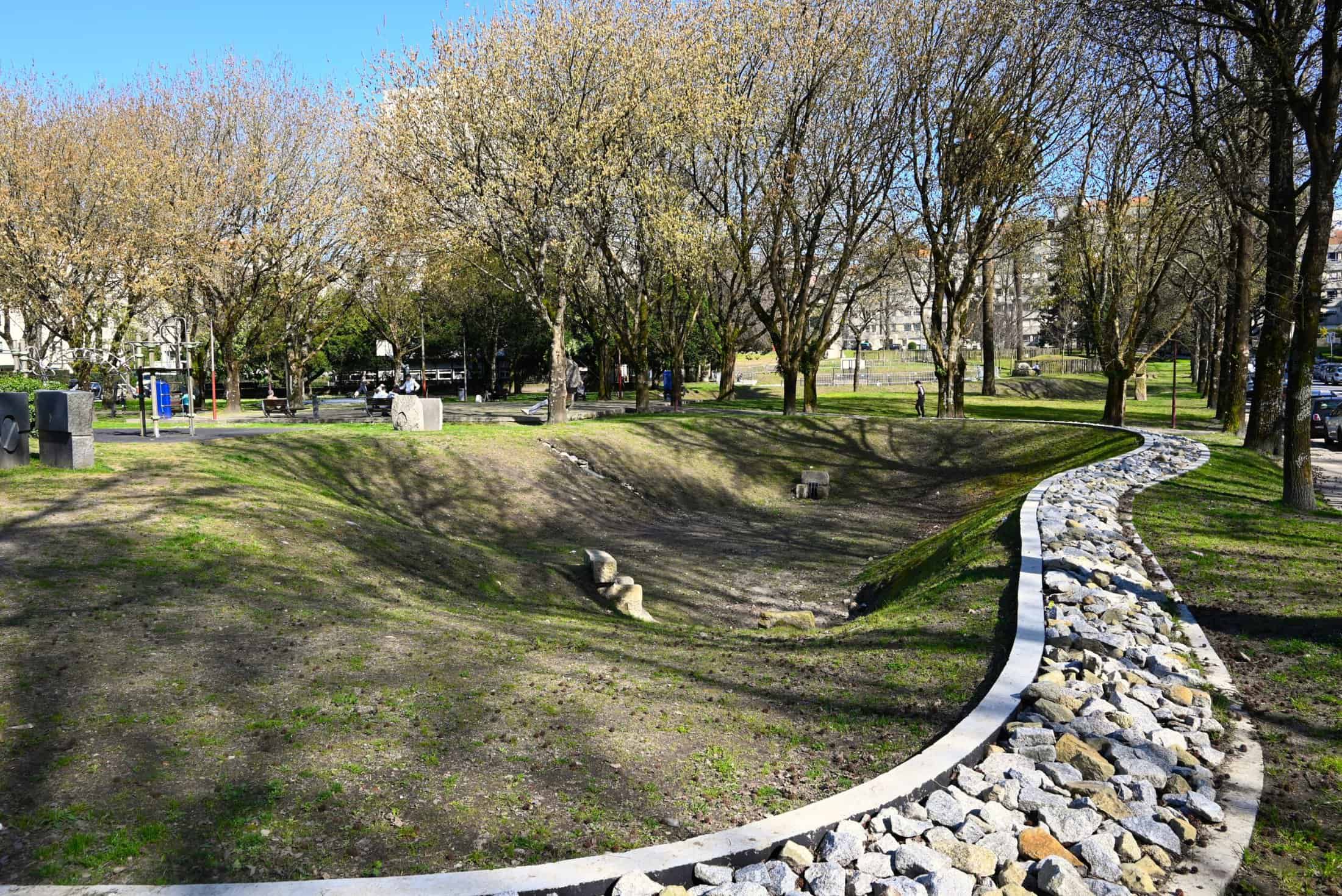
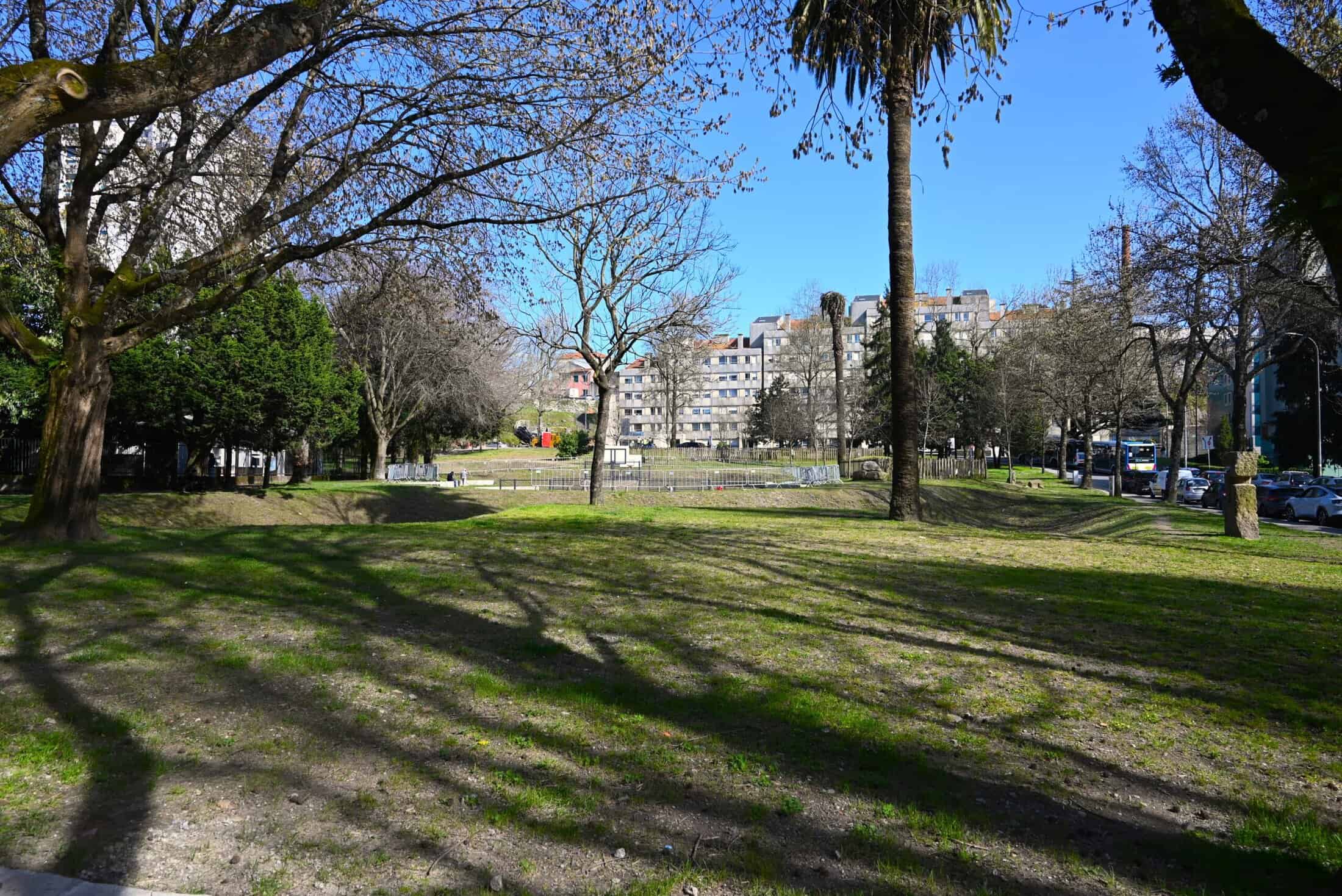
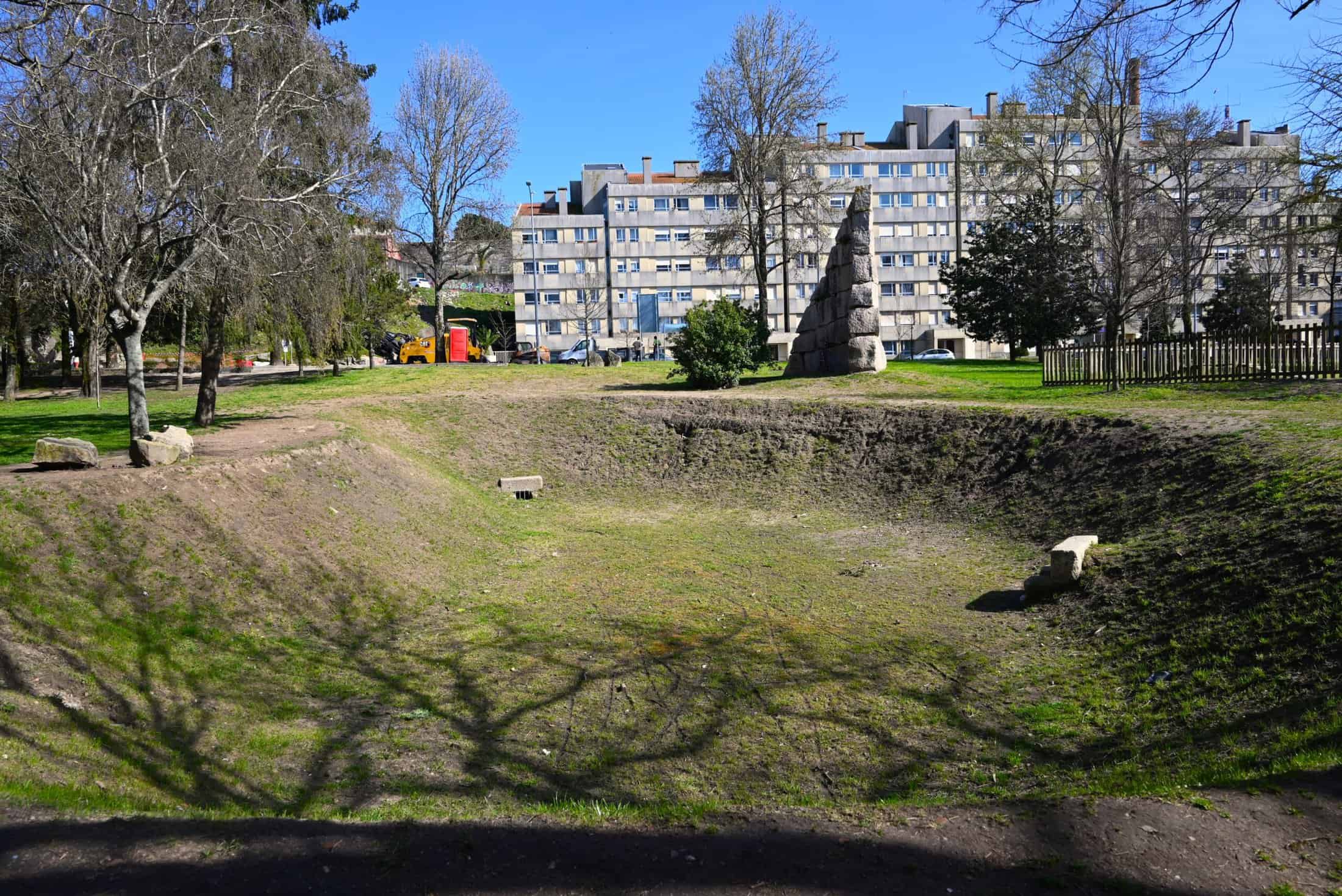
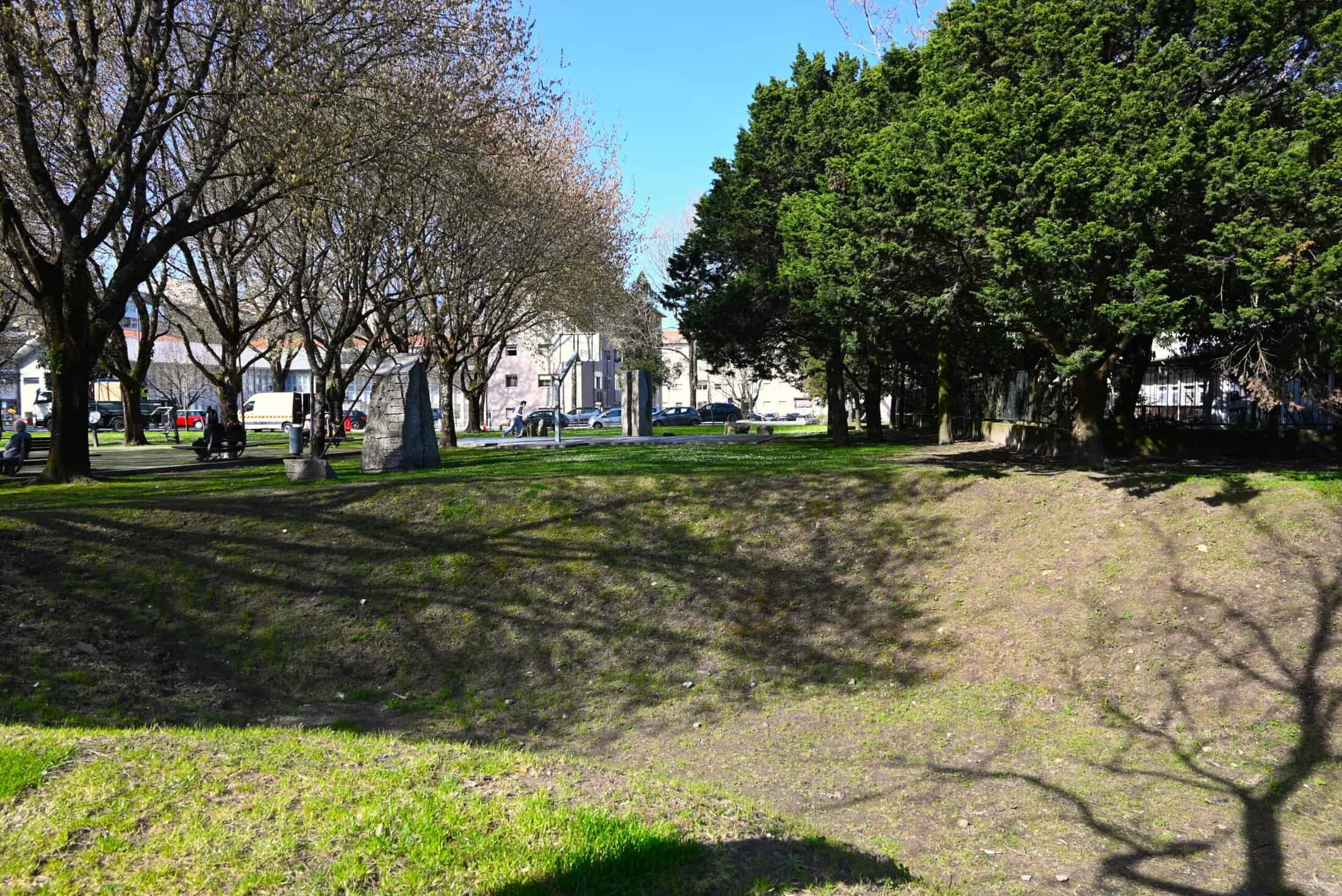
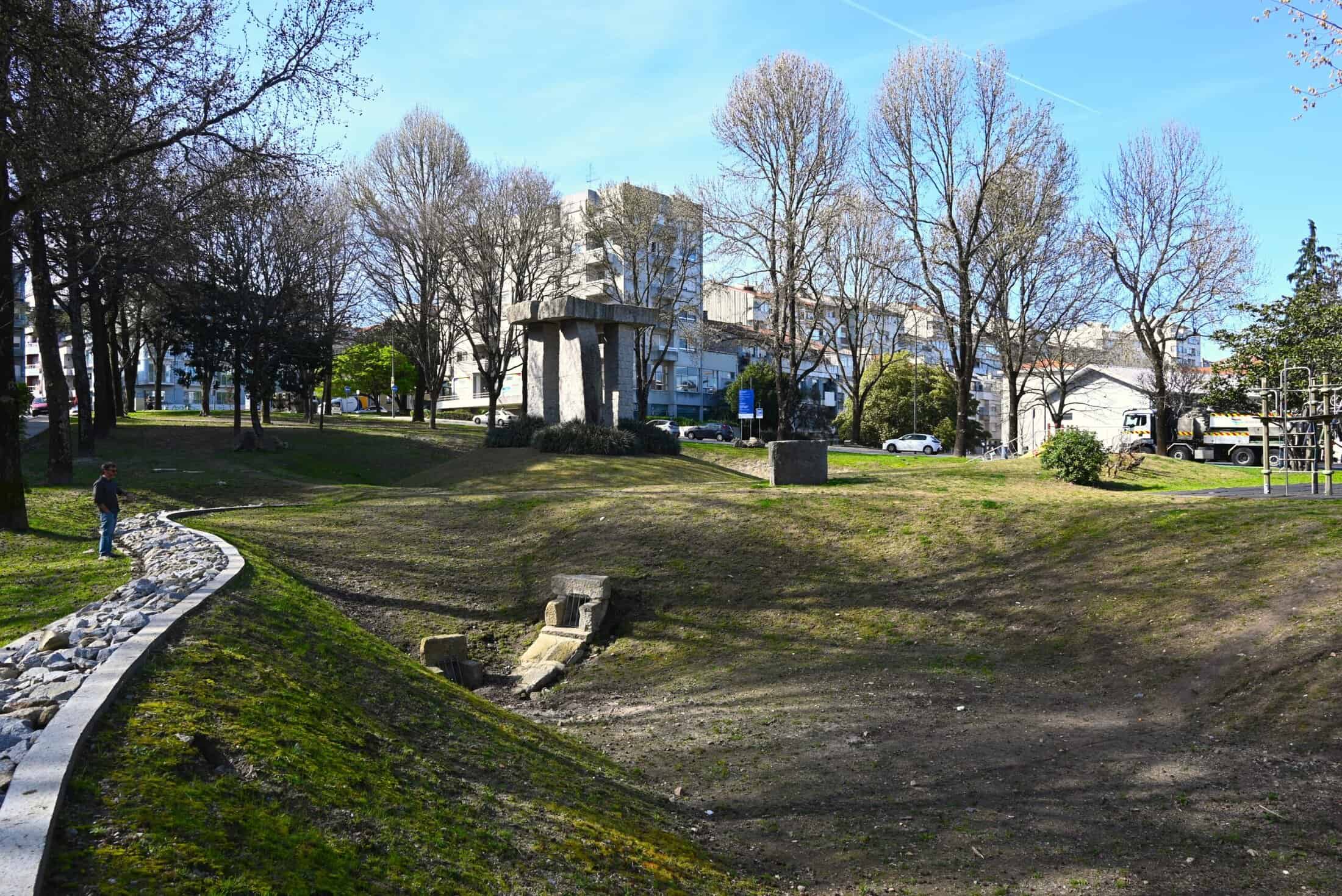
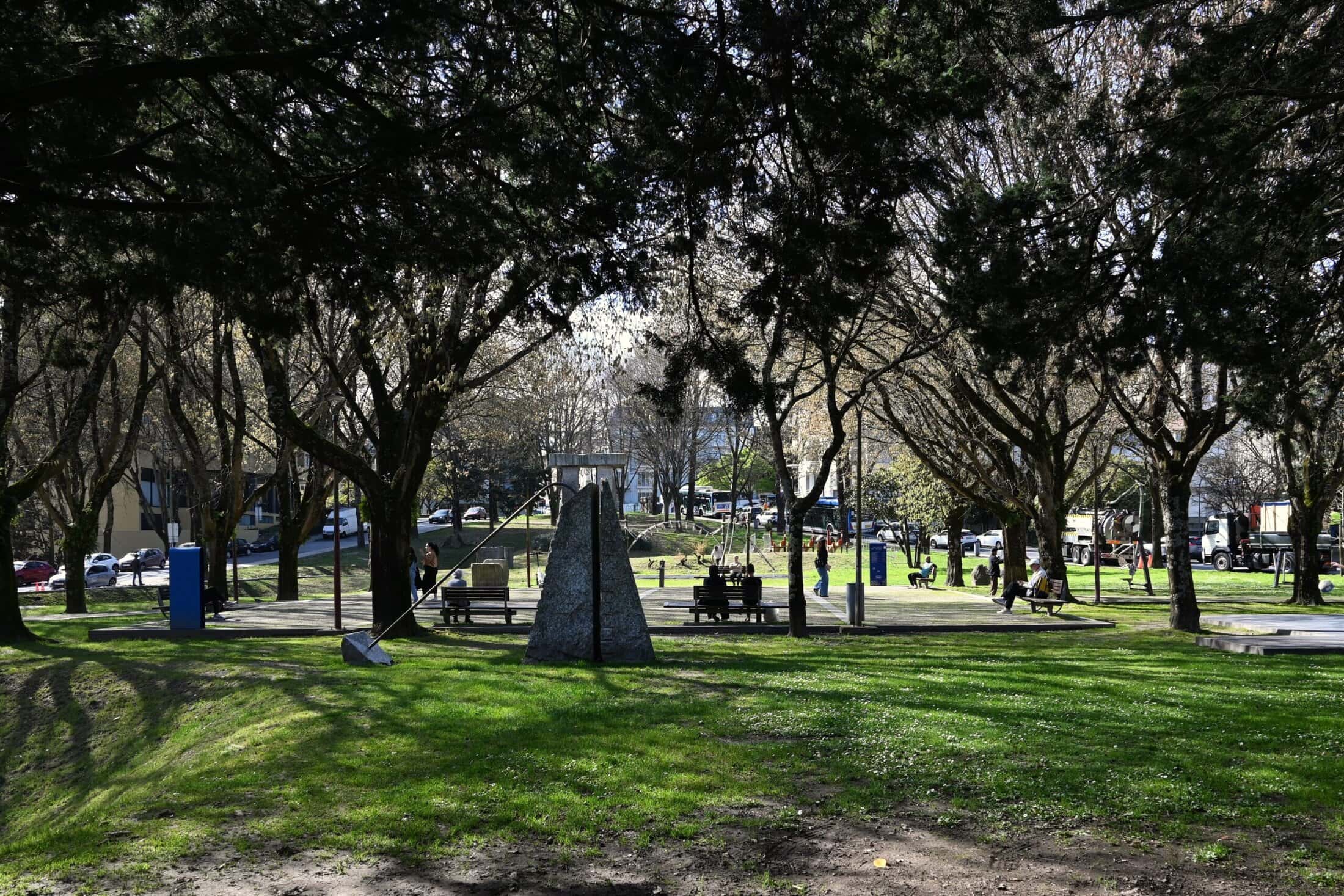
Paulo Vallada Garden has recently been converted into a water retention area for the city.
This garden, which links Avenida de Fernão de Magalhães to Rua Santos Pousada, conceals beneath its surface a stretch of water—the Ribeira do Poço das Patas—which has a basin of approximately 1,6 km² and runs through several major streets in the parish of Bonfim, passing through this garden and the Campo 24 de Agosto.
During periods of heavy rain, this stream is responsible for flooding (such as the floods of January 2023) and causes what is known as the “cascade effect” in the Fontainhas area.
During periods of heavy rain, this stream is responsible for flooding (such as the floods of January 2023) and causes what is known as the cascade effect in the Fontainhas area.
Currently, the Paulo Vallada Garden incorporates five small retention basins that serve as water storage areas. This ‘sponge’ effect will cause the water to lose momentum, reducing the likelihood of flooding along the way and the turbulence of the water as it reaches the Rio Douro, near Avenida Gustavo Eiffel.
This solution, promoted in the Plano de Valorização e Reabilitação das Linhas de Água do Município do Porto (PVRLA), is an example of the integration of sustainable drainage solutions into green spaces, which contribute to mitigating the effects of climate change.